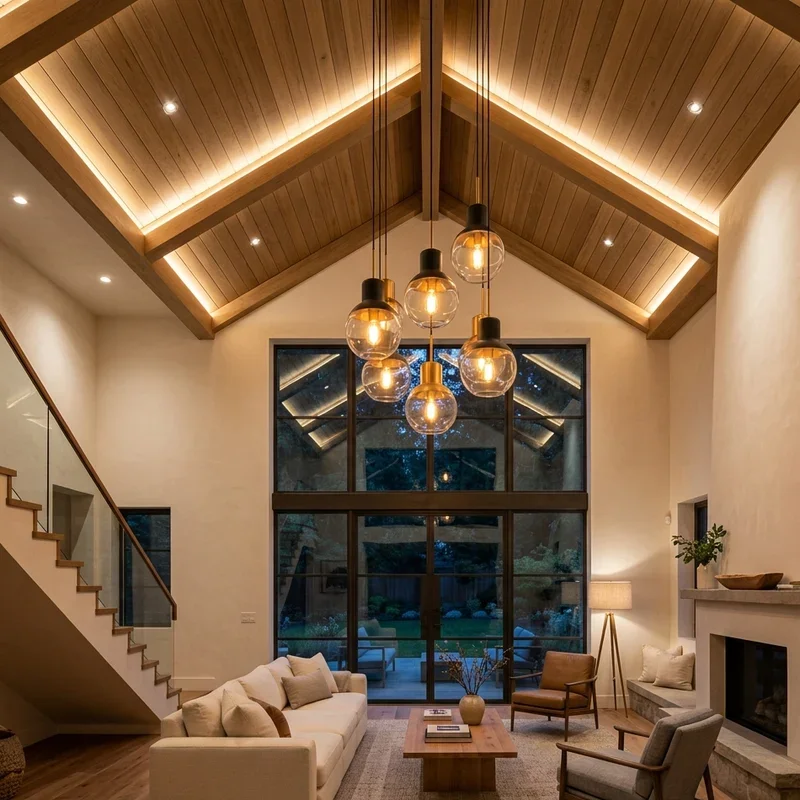
Should My Desk Face the Window? Pros and Cons
Discover should my desk face the window with pros and cons explained. Find the perfect desk position for productivity and comfort.
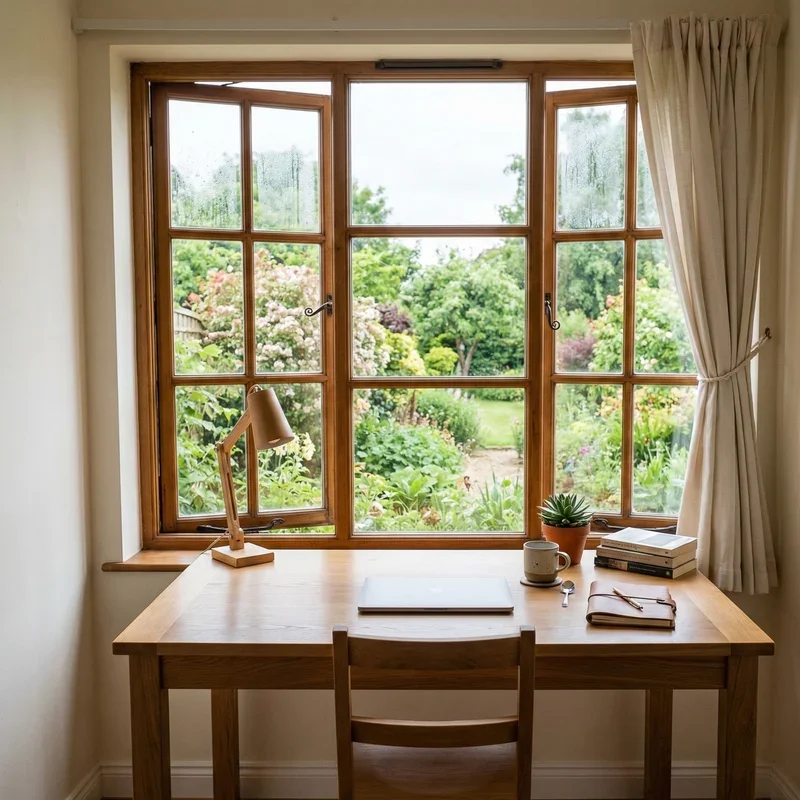
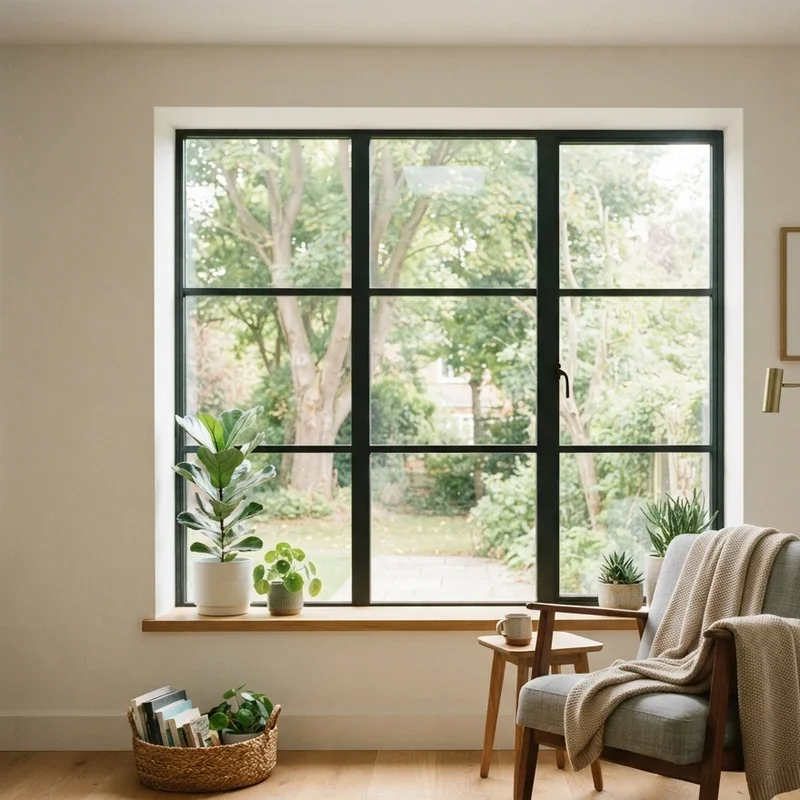
You've finally got your home office set up, but there's one decision that's been driving you absolutely crazy. Where exactly should that desk go? More specifically, should it face the window, giving you those gorgeous outdoor views, or would that be a productivity nightmare waiting to happen?
It's the kind of question that seems simple on the surface but gets surprisingly complicated the more you think about it. On one hand, gazing out at nature sounds delightful. On the other, you've got deadlines to meet and work to accomplish. The last thing you need is a setup that sabotages your focus.
Here's the thing about desk positioning. It's not just about aesthetics or personal preference. Your desk placement affects everything from your eye health to your mood, from your energy levels throughout the day to your ability to concentrate when crunch time hits.
The question of should my desk face the window involves weighing benefits against drawbacks that vary depending on your specific situation. What works brilliantly for a creative writer might be terrible for someone doing detailed spreadsheet work. The view from your particular window matters too. Overlooking a peaceful garden differs dramatically from facing a busy street.
This comprehensive guide will explore every angle of this positioning puzzle. We'll examine the genuine benefits of window-facing desks, dig into the potential problems, and explore alternative arrangements that might offer the best of both worlds.
By the time you finish reading, you'll have all the information needed to make a decision that serves your work style, your wellbeing, and your productivity goals.
The Appeal of Window-Facing Desks
Let's start by understanding why so many people dream of desks positioned directly facing windows.
Natural Light Benefits
Natural light remains one of the most sought-after elements in workspace design, and for excellent reasons. Exposure to daylight during working hours supports your circadian rhythm, helping you feel more alert during the day and sleep better at night.
Studies consistently show that workers with access to natural light report higher job satisfaction and better overall wellbeing. There's something inherently energizing about working in spaces filled with sunshine rather than relying solely on artificial lighting.
Facing a window maximizes your direct exposure to this natural illumination. You're not just receiving ambient light bouncing around the room. You're getting it straight from the source.
View and Mental Breaks
Your eyes weren't designed to stare at screens all day. Optometrists recommend the 20-20-20 rule, where you look at something twenty feet away for twenty seconds every twenty minutes. Having a window directly in front of you makes following this advice effortless.
Beyond eye health, views of nature provide genuine cognitive benefits. Research suggests that even brief exposure to natural scenes reduces stress and can restore mental energy depleted by demanding work.
When facing a window, these restorative moments happen naturally. A quick glance up from your work provides immediate access to trees, sky, or whatever scenery your window offers.
Sense of Space and Freedom
Walls can feel confining, especially during long working hours. A window-facing desk creates a sense of openness that many people find psychologically comfortable.
This expanded visual field can reduce feelings of claustrophobia that sometimes accompany small home offices. Even modest windows provide a connection to the larger world that solid walls simply cannot replicate.
For people who feel trapped by traditional office environments, this sense of visual freedom proves genuinely valuable for maintaining positive feelings about their workspace.
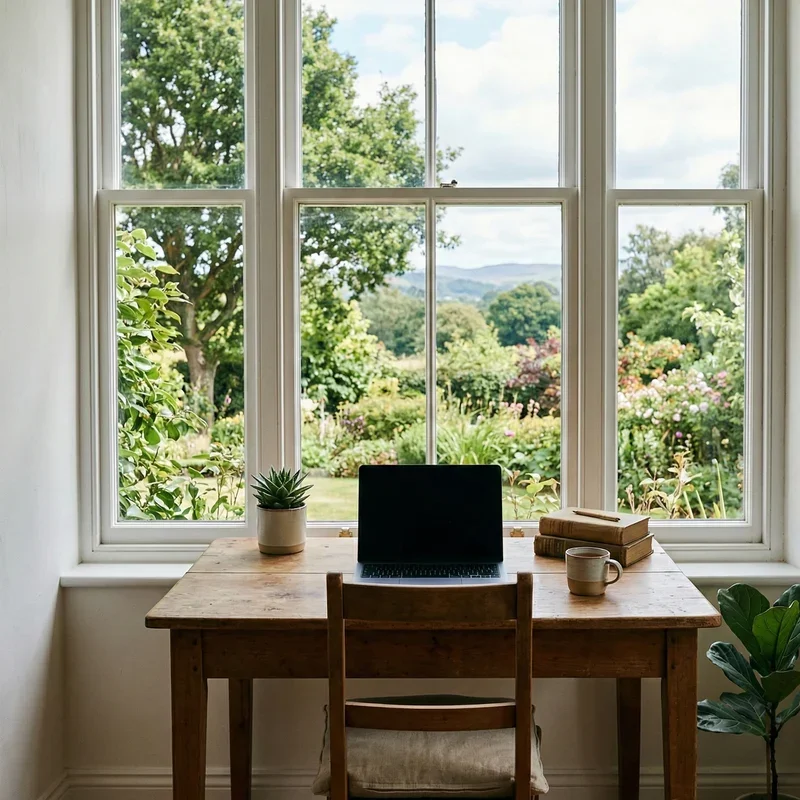
Should My Desk Face the Window? Pros and Cons of Direct Positioning
Now let's examine the significant drawbacks that come with this seemingly ideal arrangement.
Screen Glare Problems
Here's where reality crashes into that idyllic image of working while gazing at nature. Depending on your window's orientation and the time of day, direct sunlight can create brutal glare on your computer screen.
Morning sun through east-facing windows or afternoon light through western windows becomes particularly problematic. Suddenly you can't see your screen, you're squinting constantly, and that pleasant view has become an active hindrance to getting work done.
Even on overcast days, the brightness contrast between your screen and the bright sky behind it strains your eyes. Your pupils constantly adjust between the darker screen and brighter background, creating fatigue faster than you might expect.
Temperature Fluctuations
Windows are thermal weak points in any building. Sitting directly in front of one exposes you to temperature variations that can prove uncomfortable throughout the day.
Winter months bring cold drafts that make the space immediately in front of windows noticeably chillier than the rest of the room. Summer sun streaming through glass creates hot spots that make temperature regulation challenging.
These fluctuations affect comfort and concentration alike. When you're too hot or too cold, focusing on work becomes increasingly difficult.
Distraction Potential
That beautiful view cuts both ways. Yes, it provides mental breaks. But it also provides endless opportunities for distraction.
Movement outside catches your attention. A bird lands on a branch. A neighbor walks their dog. Clouds drift across the sky. Each of these minor events can pull your focus away from the task at hand.
For people who struggle with attention regulation, a window-facing desk essentially places a constantly changing entertainment screen directly in their line of sight. The very benefits of the view become productivity liabilities.
Privacy Considerations
Depending on your surroundings, facing a window might mean people outside can see directly into your workspace. This creates both privacy concerns and potential self-consciousness about being watched.
Video calls become particularly complicated. Your camera captures whatever's behind you, which in a window-facing arrangement means backlighting issues at minimum and potentially revealing your location or surroundings in ways you'd prefer to avoid.
Alternative Desk Positioning Options
If direct window-facing isn't ideal, what are the alternatives?
Perpendicular to the Window
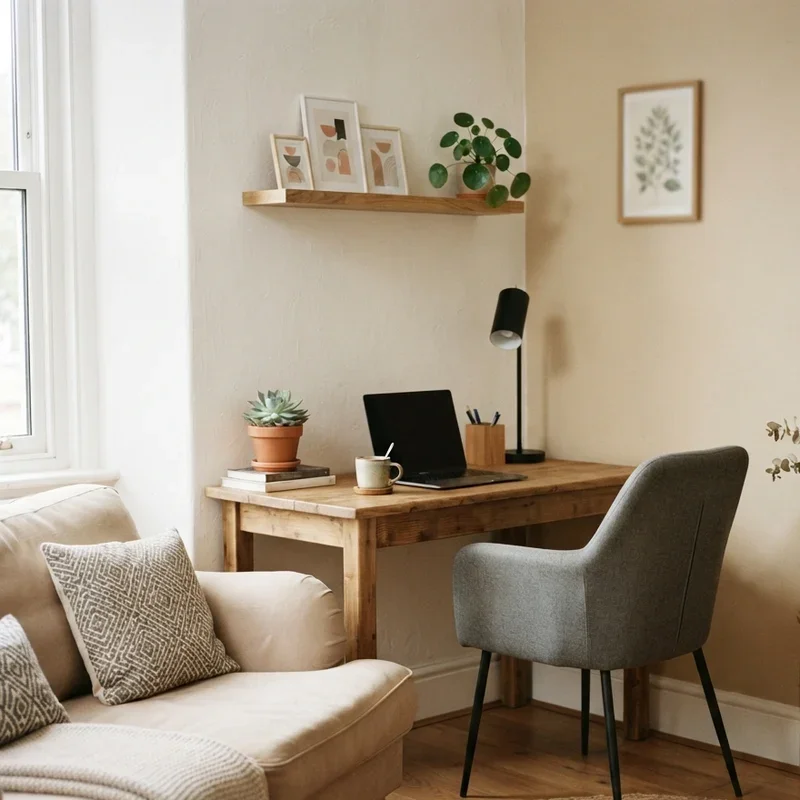
Positioning your desk perpendicular to the window, with the window to your side rather than directly ahead, offers compelling advantages.
Natural light illuminates your workspace from the side, reducing screen glare while still providing the benefits of daylight. You can glance at the view during breaks without it constantly competing for your attention during focused work.
This arrangement often represents the sweet spot between complete window deprivation and the problems of direct facing. Light experts and ergonomics consultants frequently recommend this position as optimal for most situations.
Back to the Window
Some people prefer sitting with their back to the window, facing into the room. Natural light falls over your shoulder onto your work surface, creating excellent illumination without screen glare.
This position eliminates view-related distractions entirely during focused work periods. You can still enjoy the window during breaks by simply turning around.
Video calls work better in this configuration since you're front-lit by the window behind your camera. The light source illuminates your face rather than creating harsh backlighting.
No Window at All
Interior positions away from windows remain valid choices for certain work types and certain people. Some individuals genuinely focus better without any view temptations.
Controlled artificial lighting in window-free positions offers consistency that natural light cannot provide. Sunrise, sunset, and weather changes don't affect your working conditions.
This approach sacrifices natural light benefits but can be supplemented with high-quality daylight-simulating bulbs and regular breaks to look outside.

Should My Desk Face the Window? Pros and Cons Based on Work Type
Your specific work significantly influences ideal desk positioning.
Creative and Writing Work
Writers, designers, and other creative professionals often report benefiting from window-facing positions. The mental stimulation of changing scenery and access to daydreaming opportunities can actually support creative processes.
Creative work typically involves periods of intense focus alternating with periods of more diffuse thinking. Windows support those diffuse periods beautifully.
However, during execution phases requiring sustained concentration, the same creative workers might benefit from temporarily repositioning or using window coverings to reduce distractions.
Detail-Oriented Tasks
Accounting, data entry, coding, and other precision work often benefits from minimized distractions. The constant visual stimulation of a window-facing position can undermine the sustained attention these tasks require.
Perpendicular or back-to-window positions typically serve detail workers better. They can still access views during designated breaks while maintaining focus during work periods.
Screen visibility matters enormously for this work type. Any glare issues become magnified when you're scrutinizing spreadsheets or examining code for hours at a time.
Communication-Heavy Roles
If video calls dominate your workday, lighting considerations become paramount. Window-facing positions create backlighting problems that make you appear dark and hard to read on camera.
Side-lit or front-lit positions work dramatically better for video presence. The window behind your camera creates flattering illumination that improves how you appear to colleagues and clients.
Consider investing in artificial lighting solutions if your ideal desk position doesn't provide good video call lighting naturally.
Practical Solutions for Window-Facing Desks
If you're committed to facing the window despite potential drawbacks, several solutions can mitigate problems.
Window Treatments
Adjustable blinds or shades allow you to control light throughout the day. Sheer curtains diffuse harsh sunlight while maintaining brightness and some view access.
Consider motorized options that adjust automatically based on time of day or light levels. While more expensive, they eliminate the constant manual management that light-sensitive positioning requires.
Light-filtering films applied to window glass reduce glare without completely blocking views. These represent one-time installations that require no ongoing adjustment.
Screen Positioning
Anti-glare screens attached directly to your monitor reduce glare effects regardless of lighting conditions. These inexpensive accessories make window-facing more manageable.
Monitor hoods, like those used by photographers and video editors, block direct light from reaching your screen. They look slightly unusual but prove remarkably effective.
Adjusting your screen angle can also help. Tilting monitors slightly eliminates reflections in some lighting conditions.
Strategic Scheduling
Work with your light rather than against it. Schedule tasks requiring screen focus for times when light conditions are favorable.
If morning sun creates problems, use early hours for reading, planning, or phone calls that don't require screen visibility. Save detailed screen work for when conditions improve.
This approach requires flexibility but allows you to enjoy window-facing benefits while minimizing productivity impacts.
Environmental and Seasonal Factors
Your specific environment significantly affects window-facing viability.
Geographic Considerations
Your latitude determines sun angles throughout the year. Northern locations experience lower sun angles that create more direct eye contact with the sun at certain times.
Local climate matters too. Frequently overcast regions experience fewer glare problems than sunny climates. Coastal fog or regular cloud cover actually makes window-facing more practical.
Consider your specific microclimate. Trees that provide shade in summer might be bare in winter, creating seasonal variations in light conditions.
Urban vs. Natural Views
Urban window views behave differently than natural ones. Buildings reflect light in unpredictable ways. Traffic and pedestrian movement create different distraction patterns than natural scenery.
Privacy concerns intensify in urban environments where neighboring buildings provide sight lines into your workspace.
Natural views generally prove more restorative and less distracting than urban scenes, though this varies considerably based on specific circumstances.
Making Your Decision
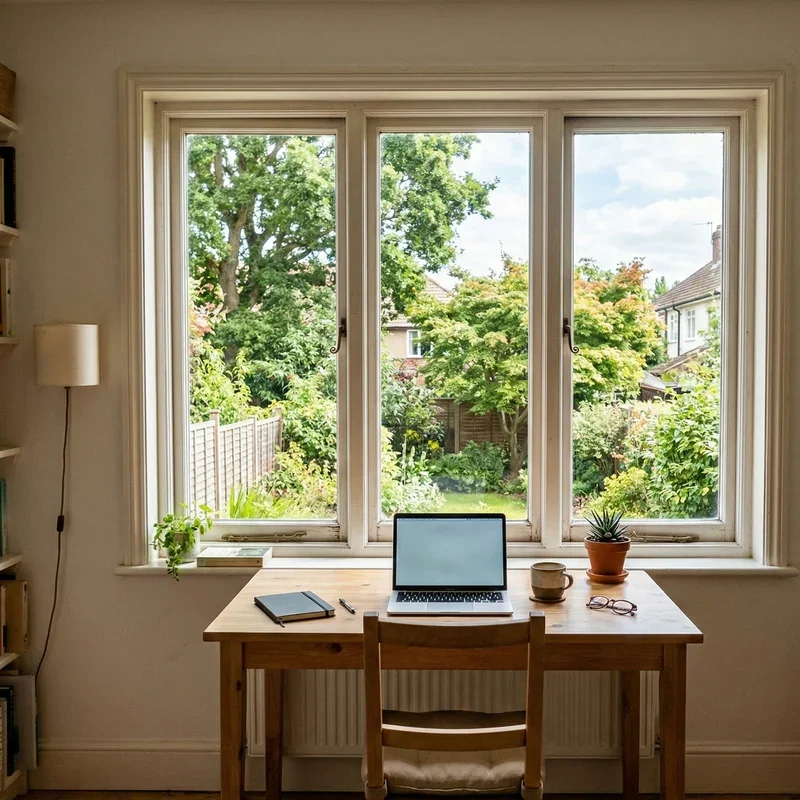
Ultimately, this choice requires honest self-assessment combined with practical evaluation of your specific situation.
Knowing Yourself
How easily do you get distracted? Be honest here. If you already struggle with focus, adding constant visual stimulation might worsen the problem.
How important is natural light to your wellbeing? Some people genuinely thrive with abundant daylight while others feel perfectly content in artificially lit spaces.
Consider your past experiences. What has worked in previous workspaces? What positioning felt most productive and comfortable?
Testing Before Committing
If possible, try different positions before permanently arranging your space. Spend a week with your desk facing the window, then try perpendicular positioning.
Track your productivity and comfort during each trial period. Your subjective feelings matter, but objective output measures reveal truths that feelings might miss.
This experimental approach prevents committing to arrangements that look good on paper but fail in practice.
Conclusion
Answering whether your desk should face the window requires balancing natural light benefits, view access, potential glare issues, and distraction concerns against your specific work requirements and personal tendencies. Perpendicular positioning often provides the best compromise, capturing daylight benefits while minimizing screen visibility problems. Testing different arrangements in your actual space reveals what truly works for your situation. The perfect desk position supports both your productivity and your wellbeing throughout long working days.
Read next: 15 Dark Green Couch Living Room Ideas for Cozy Vibes
Frequently Asked Questions
1.Does facing a window cause more eye strain than other positions?
Direct window-facing can increase eye strain from glare and brightness contrast between screen and background.
2.What direction should my window face for best desk lighting?
North-facing windows provide consistent indirect light without harsh direct sun creating glare problems.
3.Can window treatments solve all glare problems for window-facing desks?
Quality blinds or shades significantly reduce glare but may not eliminate all problems during peak sun.
4.Is perpendicular desk positioning better than facing the window directly?
Most experts recommend perpendicular positioning as optimal for balancing light benefits and screen visibility.
5.Should I face the window if I work primarily with video calls?
No, window-facing creates backlighting problems that make you appear dark on camera during calls.
Stay up to date with our latest ideas!