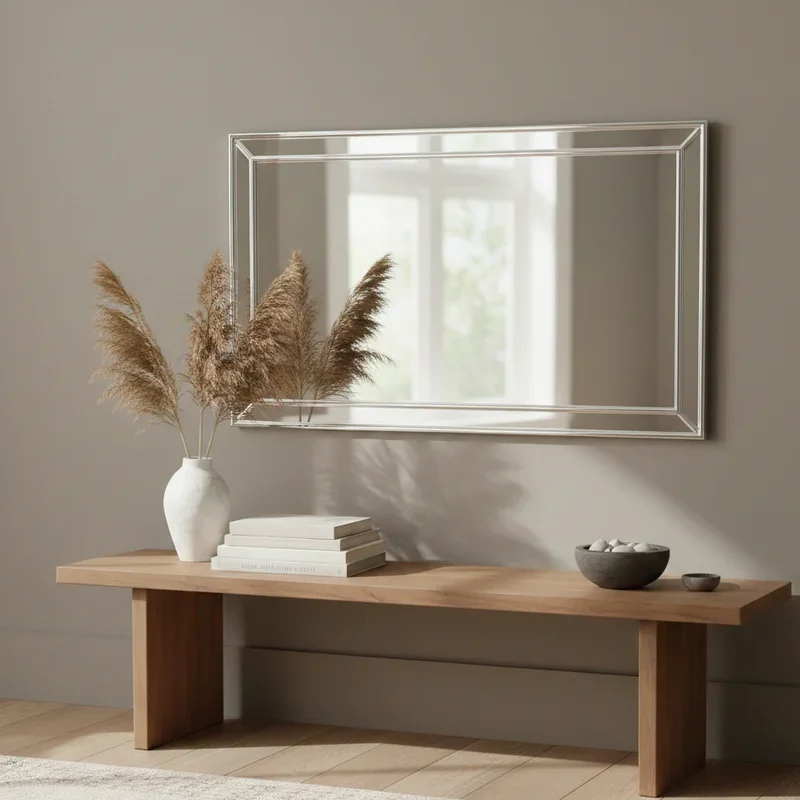
How to Hang Heavy Mirror on Wall Step by Step
Learn how to hang heavy mirror on wall step by step with the right tools, anchors, and techniques for a safe, stunning result.
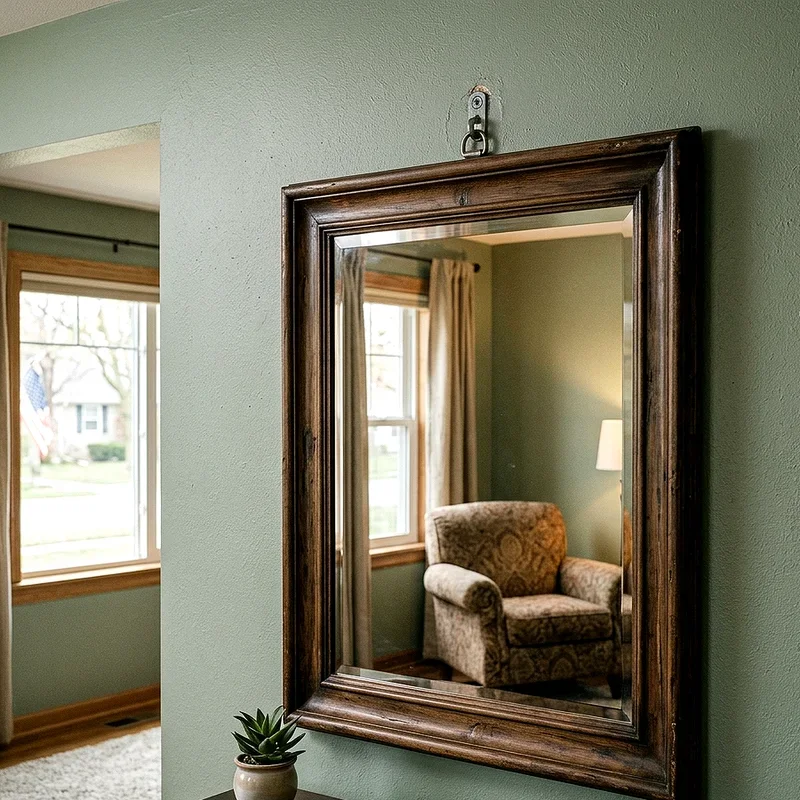
So you have picked out a gorgeous heavy mirror, and now you are staring at a blank wall wondering how on earth you are going to get that thing up there safely. Honestly, it is one of those tasks that feels way more intimidating than it actually is. A big mirror can completely transform a room, making your space feel larger, brighter, and a whole lot more put together. But here is the catch. If you do not hang it properly, you could end up with a shattered mirror on the floor and a gaping hole in your drywall. Nobody wants that kind of surprise on a Saturday afternoon. That is exactly why learning how to hang heavy mirror on wall step by step matters so much.
Why Heavy Mirrors Need Special Attention
Let me be real with you for a second. Hanging a lightweight picture frame and hanging a fifty pound mirror are two completely different ball games. You cannot just grab a random nail and hope for the best. Heavy mirrors put serious stress on your walls, and if the support is not adequate, gravity will win every single time. The last thing you want is to hear a crash at three in the morning because your mirror decided to take a nosedive.
On top of that, heavy mirrors pose a genuine safety risk. Broken glass is no joke, especially if you have kids or pets running around the house. The weight also means that the hanging hardware needs to be rated for the load. Regular picture hooks just will not cut it. You need anchors, screws, and brackets that are designed specifically for heavier items. Think of it like this. You would not use a fishing line to tow a truck, right? Same principle applies here.
Tools and Materials You Will Need Before You Start
Before you even think about drilling into your wall, you need to gather your supplies. Running back and forth to the hardware store in the middle of a project is a real mood killer. Here is what you should have on hand to make the whole process smooth and stress free.
First off, you are going to need a stud finder. This little gadget is your best friend when it comes to locating the wooden framing behind your drywall. You will also want a level, a tape measure, a pencil for marking, a drill with the right drill bits, and of course the appropriate wall anchors. For mirrors over twenty pounds, toggle bolts or heavy duty wall anchors are the way to go. If you can hit a stud, that is even better because a single stud can support a whole lot of weight. A helper is also a good idea since holding a heavy mirror while trying to line things up by yourself is a recipe for frustration.
How to Determine Your Mirror's Weight and Picking the Right Hardware
You might be surprised at how much mirrors actually weigh. A standard wall mirror that measures about three feet by four feet can easily tip the scales at thirty to forty pounds, and decorative mirrors with thick frames can weigh even more. If the packaging does not list the weight, just step on a bathroom scale while holding the mirror and subtract your own weight. Simple math, big results.
Once you know the weight, you can pick the right hardware. For mirrors up to twenty five pounds, heavy duty picture hangers usually do the trick. For anything between twenty five and fifty pounds, you will want to use wall anchors rated for that range or, ideally, screw directly into a wall stud. Mirrors over fifty pounds often require a French cleat system or a specialized mirror hanging kit. Choosing the wrong hardware is one of the most common mistakes people make, and it almost always ends badly. Do yourself a favor and match the hardware to the weight.
Finding the Perfect Spot on Your Wall
Placement matters more than you might think. Sure, you could technically hang a mirror anywhere, but there are a few things to consider if you want it to look intentional and polished. For starters, most designers recommend hanging mirrors at eye level, which is roughly sixty to sixty five inches from the floor to the center of the mirror. In a living room, you might want it above a console table or fireplace mantel. In a bathroom, obviously, it goes above the vanity.
Lighting plays a huge role too. Hanging your mirror across from a window lets it bounce natural light around the room, which is a trick interior designers have been using for ages. Also, think about what the mirror will reflect. A mirror reflecting a beautiful bookshelf or a piece of art looks fantastic. A mirror reflecting a messy closet door? Not so much. Take a few minutes to hold the mirror up against different spots and see what looks and feels right before committing to a location.
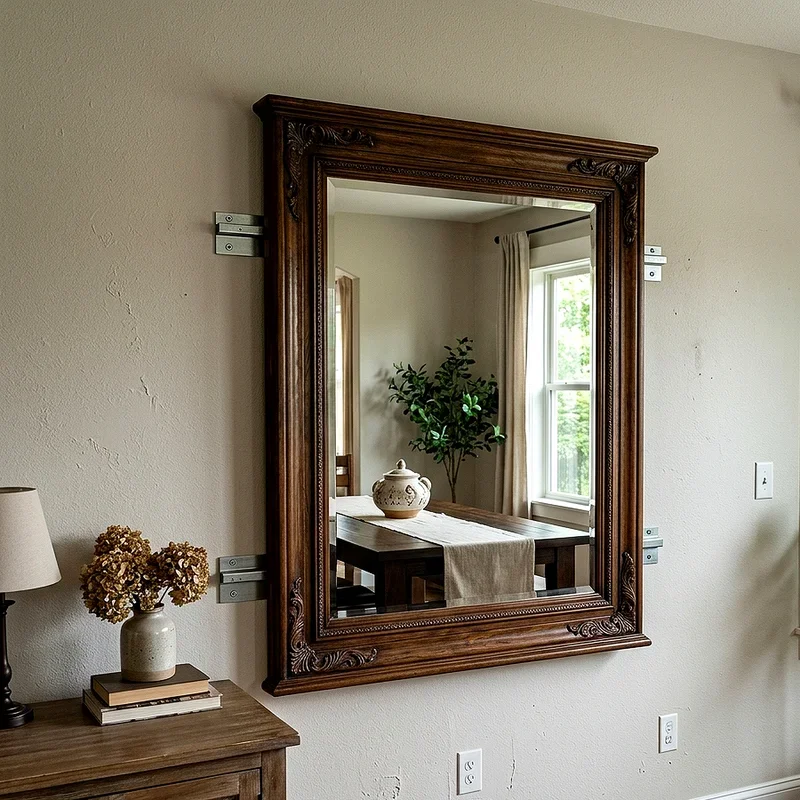
How to Hang Heavy Mirror on Wall Step by Step
Alright, here we go. This is the meat and potatoes of the whole project. Follow these steps carefully, and you will have that mirror up on the wall looking absolutely stunning in no time.
Step 1: Locate the Wall Studs
Grab your stud finder and run it along the wall where you want to hang the mirror. When it beeps or lights up, mark that spot with a pencil. Studs are typically spaced sixteen inches apart, so once you find one, you can usually predict where the next one is. If your mirror is wide enough to reach two studs, that is the gold standard. Screwing directly into studs gives you the strongest possible hold, and honestly, it is the safest route for anything heavy.
Step 2: Mark Your Hanging Points
Hold the mirror up against the wall, or better yet, have a friend hold it while you step back and check the position. Once you are happy with the placement, use a pencil to mark the top edge of the mirror on the wall. Now flip the mirror over and measure the distance from the top of the mirror to the hanging hardware on the back. Transfer that measurement to the wall, measuring down from your pencil mark. That is where your screws or anchors will go.
Step 3: Install the Wall Anchors or Drill into Studs
If you are lucky enough to have studs right where you need them, drill pilot holes and drive your screws in, leaving about a quarter inch sticking out for the mirror wire or bracket to catch on. If you are not hitting a stud, do not panic. Use heavy duty wall anchors like toggle bolts. Drill a hole the size specified on the anchor packaging, insert the anchor, and then drive the screw into it. Make sure the anchor is seated flush against the wall before tightening. This part is crucial, so take your time and do not rush it.
Step 4: Double Check with a Level
Before you hang anything, place your level against the screws or brackets to make sure they are perfectly horizontal. Even being off by a fraction of an inch can make a mirror look crooked, and trust me, once you notice it, you will never be able to unsee it. If things are not level, adjust your screws or anchors before moving on. It takes an extra minute but saves you from the headache of redoing the whole thing later.
Step 5: Hang the Mirror and Secure It
Now comes the moment of truth. Carefully lift the mirror and hook the wire or bracket onto the screws. If the mirror is particularly heavy, this is definitely a two person job. Once it is up, gently nudge it left or right until it is centered and level. Give it a little tug to make sure it feels secure. If it wobbles or shifts, take it back down and check your anchors. For extra peace of mind, you can use adhesive museum putty or mirror clips at the bottom corners to keep it from swinging or shifting over time.
The French Cleat Method for Extra Heavy Mirrors
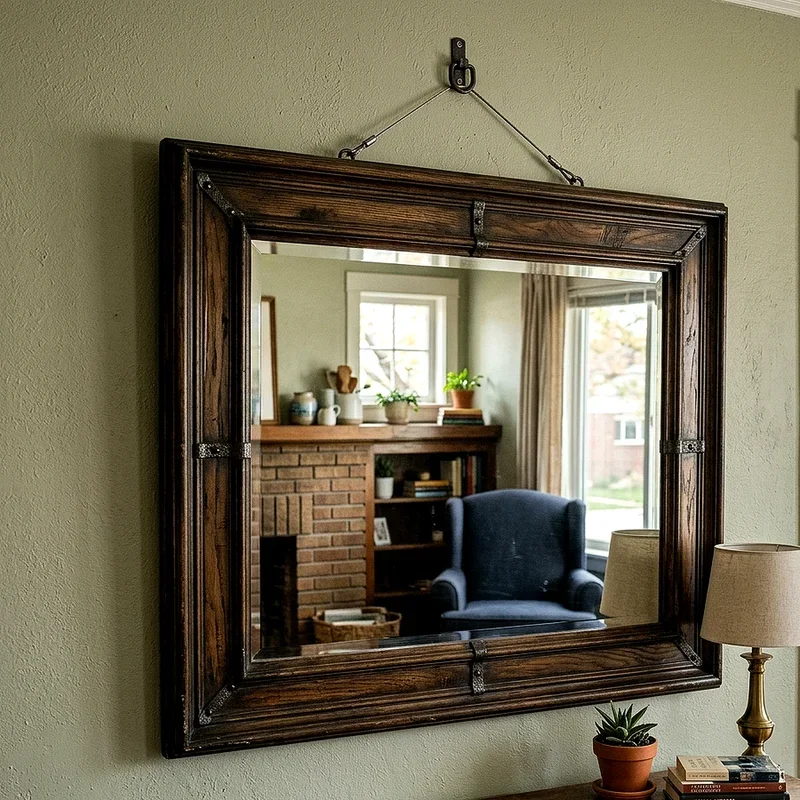
If your mirror is on the heavier side, say over sixty or seventy pounds, a French cleat is hands down the best option. A French cleat is basically a two piece interlocking system where one piece mounts to the wall and the other attaches to the back of the mirror. When you hang the mirror, the two pieces lock together and distribute the weight evenly along the entire length of the cleat. It is incredibly strong and surprisingly easy to install.
To set one up, cut a piece of lumber at a forty five degree angle to create two interlocking strips. Screw one strip to the wall, making sure it is level and anchored into at least two studs. Attach the other strip to the back of the mirror frame. Then simply lift the mirror and let the two pieces slide together. The beauty of a French cleat is that it allows you to make small horizontal adjustments after hanging, so getting the mirror perfectly positioned is a breeze.
Common Mistakes People Make When Hanging Heavy Mirrors
Even seasoned DIY enthusiasts trip up sometimes when it comes to mirror hanging. One of the biggest blunders is underestimating the mirror's weight and using hardware that is too flimsy. Another frequent mistake is skipping the stud finder and just guessing where the studs are. Guessing is a gamble, and walls do not forgive bad bets. You might get lucky, or you might end up with a hole in the wrong spot and zero support.
People also tend to rush through the leveling step, which leads to a mirror that looks slightly off. It drives you crazy every time you walk past it. Additionally, forgetting to account for the distance between the top of the mirror and the hanging point is a classic error that results in the mirror sitting too high or too low. And finally, not having a helper when dealing with anything over twenty pounds is just asking for trouble. Swallow your pride and ask someone to lend a hand.
Hanging Mirrors on Different Wall Types
Not all walls are created equal, and the type of wall you are working with changes the approach significantly. Standard drywall is the most common and the easiest to work with. Just use the stud and anchor method described above and you will be fine. Plaster walls, on the other hand, are trickier because they are harder and more brittle. You will need masonry drill bits and should be extra careful not to crack the surrounding plaster when drilling.
If you are dealing with brick or concrete walls, the process is a bit more involved. You will need a hammer drill and masonry anchors specifically designed for solid walls. The upside is that brick and concrete are incredibly strong, so once your anchors are in, that mirror is not going anywhere. For tile walls, like in a bathroom, use a tile drill bit first to get through the tile without cracking it, then switch to a regular bit for the wall behind it. Whatever wall type you have, there is a solution. You just need to use the right tools for the job.
Safety Tips to Keep in Mind Throughout the Process
Working with heavy mirrors and power tools calls for a bit of common sense and caution. Always wear safety glasses when drilling, because tiny bits of drywall, plaster, or brick can fly into your eyes faster than you would expect. If the mirror is particularly large, wear work gloves to get a better grip and protect your hands from sharp edges. Clear the area below where you are working so that if something does go wrong, nothing else gets damaged.
It is also smart to check for electrical wires and plumbing behind the wall before drilling. Most stud finders have a wire detection feature, so use it. Hitting a live wire is dangerous and hitting a water pipe is an expensive mess. When lifting the mirror into place, bend with your knees and keep your back straight. Heavy mirrors are awkward to carry, and a back injury will put a damper on your weekend real quick. Safety first, always.
How to Make Sure Your Mirror Stays Secure for Years
Hanging the mirror is only half the battle. You also want to make sure it stays where you put it. Every few months, give the mirror a gentle tug to check that the hardware has not loosened. Walls settle over time, and screws can slowly work their way out, especially in older homes. If you notice any movement, tighten things up right away before the problem gets worse.
For mirrors in high traffic areas or earthquake prone zones, consider using mirror adhesive strips as a backup to your mechanical fasteners. These strips create an additional bond between the mirror and the wall that can prevent a catastrophic fall even if the primary hardware fails. Anti tip furniture straps can also be used on the bottom corners for extra security. A little bit of extra precaution goes a long way, and it sure beats sweeping up broken glass.
When You Should Call a Professional Instead
Look, there is absolutely no shame in calling in a professional if the job feels over your head. If your mirror weighs over a hundred pounds, or if you are dealing with unusual wall materials like stone veneer or metal studs, a handyman or contractor can get it done safely and quickly. The cost of hiring someone is a whole lot less than the cost of replacing a broken mirror and repairing damaged walls.
Similarly, if you are hanging a mirror in a location where failure could be dangerous, like above a bed or in a nursery, it might be worth the peace of mind to have a professional handle it. They have the experience and the specialized tools to get it right the first time. Sometimes the smartest DIY move you can make is knowing when to step aside and let someone else take the reins.
Conclusion
Learning how to hang heavy mirror on wall step by step is one of those satisfying home improvement skills that pays off every time you walk past your handiwork. With the right tools, proper anchors, and a bit of patience, you can mount even the heaviest mirrors safely and securely. Take the time to find your studs, level everything carefully, and choose hardware that matches the weight. Your walls and your mirror will thank you for it.
Read next: 15 Full Length Mirror Decorating Ideas for Chic Rooms
Frequently Asked Questions
Q1: What is the best anchor for hanging a heavy mirror on drywall?
A: Toggle bolts are the strongest drywall anchors and support mirrors over fifty pounds securely.
Q2: Can I hang a heavy mirror without finding a wall stud?
A: Yes, use heavy duty toggle bolts or snap toggle anchors rated for your mirror's weight.
Q3: How do I know if my wall can support a heavy mirror?
A: Check the wall type and use appropriate anchors rated for the mirror's total weight.
Q4: Is a French cleat better than regular hooks for heavy mirrors?
A: Absolutely, French cleats distribute weight evenly and are ideal for mirrors over sixty pounds.
Q5: Should I hire a professional to hang a very heavy mirror?
A: For mirrors over one hundred pounds or tricky wall types, hiring a professional is wise.
Stay up to date with our latest ideas!