How to Adjust Cabinet Doors That Won’t Close
Learn how to adjust cabinet doors that won't close with our simple guide. Fix sagging, misaligned, and stubborn doors in minutes.
There's something incredibly annoying about a cabinet door that refuses to cooperate. You push it closed, walk away feeling satisfied, and moments later that stubborn door swings right back open like it's got a mind of its own. Or maybe it's not quite that dramatic, but there's that persistent gap at the top that bugs you every single time you walk past.
Kitchen cabinets take an absolute beating over the years. We're talking thousands upon thousands of open-close cycles, heavy pots and pans being stored, kids hanging on doors, and general wear and tear that gradually takes its toll. It's honestly a wonder they last as long as they do without needing some attention.
Here's the good news though. Most cabinet door issues don't require calling a professional or spending a fortune on repairs. In fact, the vast majority of alignment problems can be solved in just a few minutes with nothing more than a screwdriver and a little know-how.
Learning how to adjust cabinet doors that won't close is one of those practical skills that pays dividends for years. Once you understand how the adjustment mechanisms work, you'll find yourself fixing wonky doors throughout your home with surprising confidence.
This comprehensive guide will walk you through diagnosing exactly what's causing your door problems, understanding the different hinge types you might encounter, and performing the adjustments that get everything sitting pretty again. Whether you're dealing with a single troublesome door or want to tune up your entire kitchen, you'll find the answers you need right here.
Understanding Why Cabinet Doors Stop Closing
Before grabbing your tools, understanding what causes closure problems helps you target the right fix.
Common Causes of Door Misalignment
Cabinet doors go out of whack for numerous reasons, and pinpointing yours helps determine the solution.
Loose hinge screws are perhaps the most frequent culprit. Over time, the constant stress of opening and closing gradually loosens these screws, allowing the door to shift position.
Warped doors result from humidity changes and temperature fluctuations. Wood naturally expands and contracts with environmental conditions, sometimes developing permanent twists that prevent proper closure.
House settling affects cabinet alignment just like it affects everything else in your home. As foundations shift slightly over the years, cabinet frames can move just enough to throw door alignment off.
Impact damage from slamming or bumping can bend hinges or shift mounting positions. That time the kid yanked the pantry door extra hard might have caused more damage than you realized.
Identifying Your Specific Problem
Take a moment to examine what's actually happening with your problematic door.
Does the door hang crooked, with one corner higher than the other? This typically indicates a sagging problem often caused by loose hinges.
Is the door touching the frame on one side but gapping on the other? This suggests the door needs horizontal adjustment to sit centered.
Does the door sit too far from the cabinet or not sit flush when closed? This points to depth adjustment needs.
Does the door refuse to latch even when aligned properly? The problem might be with the catch mechanism rather than the hinges themselves.
Types of Cabinet Hinges
Different hinge styles require different adjustment approaches.
European Concealed Hinges
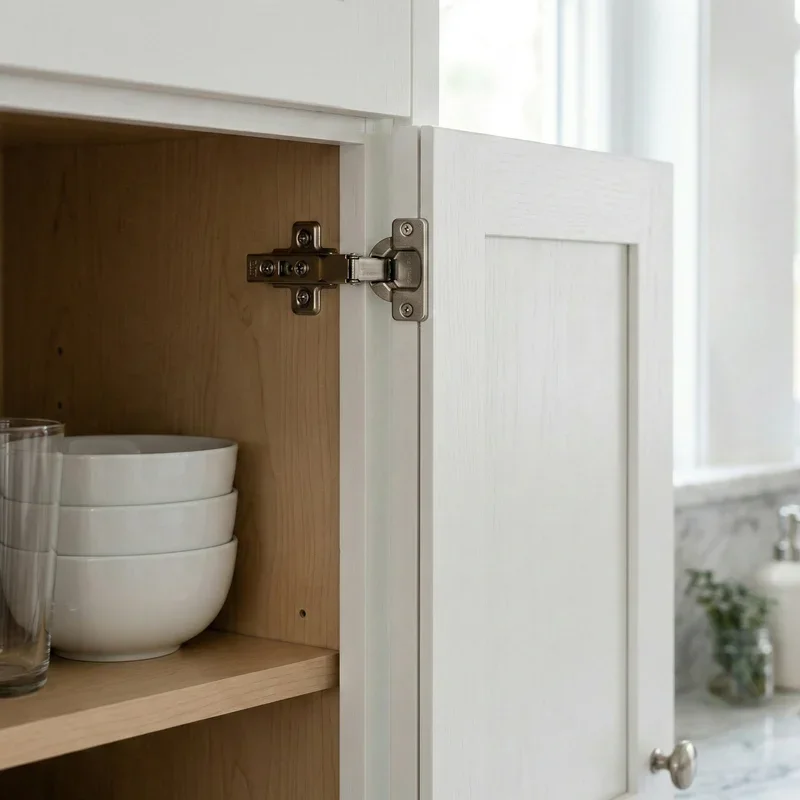
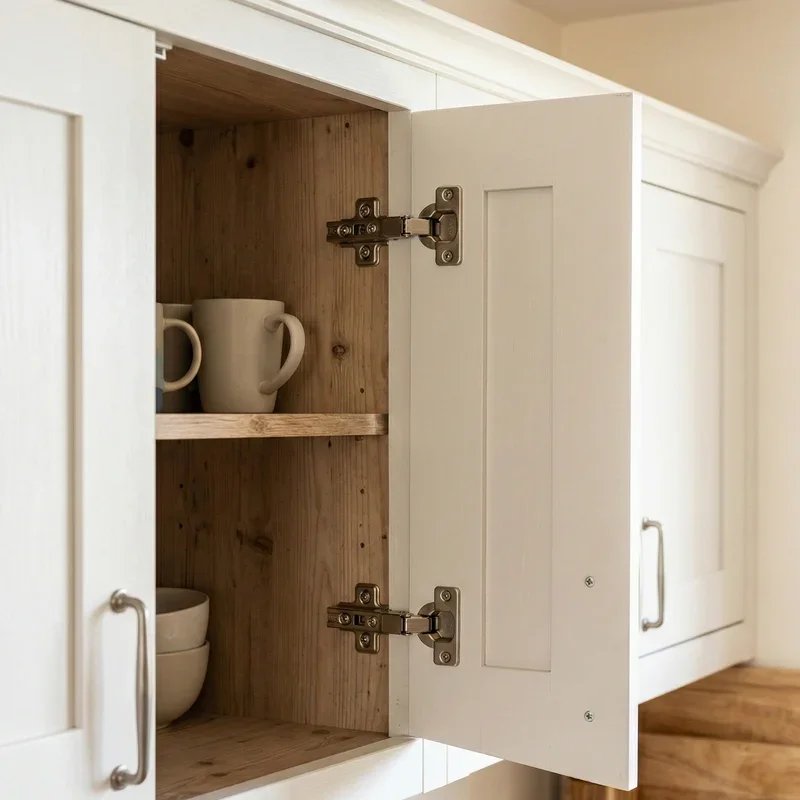
These modern hinges hide completely inside the cabinet when doors are closed. They're the standard choice for contemporary kitchens and offer the most adjustment options.
European hinges feature built-in adjustment screws allowing movement in three directions. You can shift doors side to side, up and down, and in and out without removing or repositioning the hinges themselves.
Most European hinges clip onto mounting plates attached to the cabinet frame. This two-piece design simplifies both installation and adjustment.
Traditional Surface-Mounted Hinges
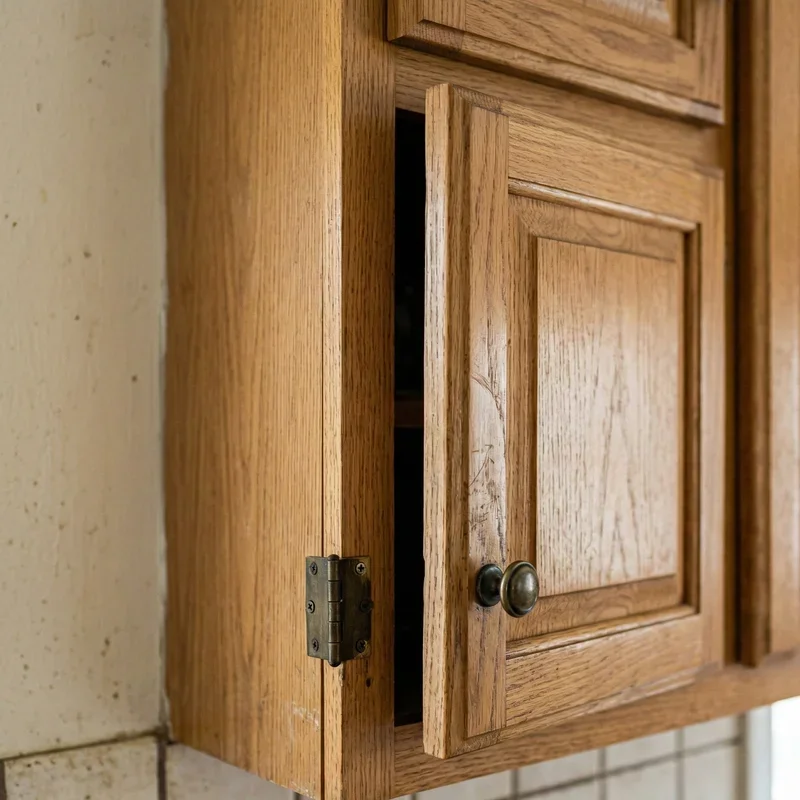
These visible hinges mount on the outside of the cabinet frame with the door attached to the other leaf.
Adjustment options are more limited with surface-mounted hinges. Side-to-side movement requires repositioning the entire hinge rather than turning adjustment screws.
However, these hinges are straightforward to work with. Loosening screws, repositioning the door, and retightening often solves alignment issues quickly.
Overlay and Inset Variations
Regardless of style, hinges come designed for specific door positions relative to the frame.
Full overlay hinges position doors to cover most of the frame. Half overlay splits frame coverage between adjacent doors. Inset hinges allow doors to sit flush within the frame opening.
Your adjustment approach doesn't change based on overlay type, but understanding your configuration helps when diagnosing certain problems.
How to Adjust Cabinet Doors That Won't Close: European Hinges
Let's tackle the most common hinge type first.
Locating Adjustment Screws
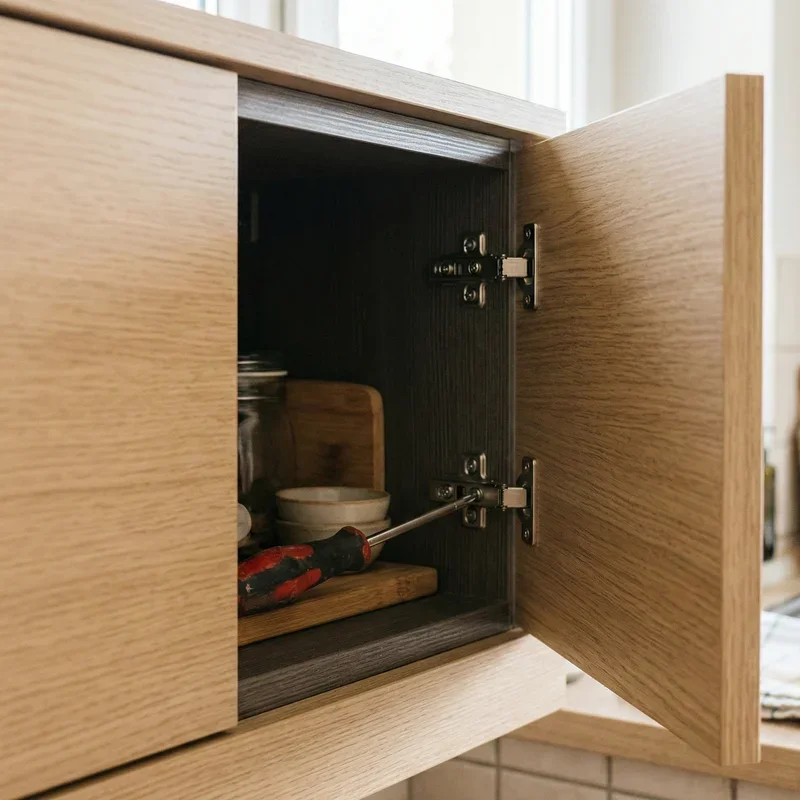
European hinges typically feature two or three adjustment screws, each controlling different movement directions.
Open the cabinet door and examine the hinge mechanism attached to the door itself. You'll see screws on the hinge arm, the main body, and sometimes on the mounting plate.
The screw positions vary between manufacturers, but the functions remain consistent. Usually, one screw handles horizontal adjustment, another controls vertical, and a third manages depth.
Horizontal Adjustment
This side-to-side adjustment centers the door within its frame opening or adjusts spacing between adjacent doors.
The horizontal adjustment screw is typically the single screw closest to the cabinet side, located on the hinge arm near the mounting plate connection.
Turning this screw clockwise usually moves the door toward the hinge side. Counterclockwise moves it away. Make small turns, perhaps quarter rotations, and check results between adjustments.
Vertical Adjustment
This up-and-down adjustment corrects sagging corners or uneven gap spacing at top and bottom.
Vertical adjustment requires loosening screws on the mounting plate attached to the cabinet frame. With screws loosened slightly, you can shift the entire hinge assembly up or down.
After repositioning, retighten the mounting plate screws firmly. Check that the door sits level with adjacent doors or frame edges.
Depth Adjustment
This in-and-out adjustment controls how far from the cabinet the door sits when closed.
The depth adjustment screw usually sits on the main hinge body, often accessible only when the door is open. Some hinges use a screw at the hinge cup instead.
Turning this screw changes how tightly the door pulls against the frame. Adjust to eliminate gaps while allowing smooth operation.
Soft-Close Mechanism Adjustment
Many modern European hinges include soft-close features that can affect closing behavior.
If your soft-close door won't close completely, the mechanism might need adjustment or the door's alignment might be preventing it from engaging properly.
Address door alignment first before adjusting soft-close settings. Often, fixing alignment automatically resolves the soft-close issues.
How to Adjust Cabinet Doors That Won't Close: Traditional Hinges
Surface-mounted and traditional hinges require slightly different techniques.
Tightening Loose Screws
Start with the simplest fix by checking all hinge screws for tightness.
Using a properly sized screwdriver, carefully tighten each screw securing hinges to both door and frame. Don't overtighten, which can strip screw holes or damage wood.
Often, simply tightening loose screws resolves sagging and misalignment issues completely. This should always be your first step before attempting more involved adjustments.
Repositioning Hinges
When tightening doesn't solve the problem, you might need to adjust hinge positions.
Loosen screws just enough to allow hinge movement. Shift the hinge in whatever direction addresses your specific misalignment issue, then retighten.
For significant repositioning, you might need to drill new pilot holes while filling old holes with wooden toothpicks and glue to provide fresh grip for screws.
Fixing Stripped Screw Holes
Stripped holes are common in older cabinets where screws no longer grip tightly.
Remove the hinge and enlarge the stripped hole slightly. Insert wooden dowels, golf tees, or toothpicks coated with wood glue. Let the glue dry completely.
Drill new pilot holes into this reinforced area, then remount the hinge. The fresh wood provides solid grip for screw threads.
Adding Cardboard Shims
Sometimes hinges need slight adjustment that repositioning can't achieve.
Thin cardboard shims placed behind hinges can tilt doors to correct minor alignment issues. This old-school trick still works remarkably well.
Cut cardboard pieces matching hinge size. Place them behind the hinge, between the hinge and cabinet frame, to push the door outward slightly.
Additional Closure Problems
Some issues aren't hinge-related at all.
Magnetic Catch Adjustment
If your doors have magnetic catches, these might need attention.
Catches that are positioned too far from the door can't grab properly. Loosen the mounting screws, reposition the catch closer to the door, and retighten.
Worn or weakened magnets sometimes need replacement. Magnetic catches are inexpensive and easy to swap out.
Door Warping Issues
Warped doors present challenges that hinge adjustment alone can't solve.
Minor warping can sometimes be compensated by adjusting hinges to apply pressure that counteracts the warp. This works for slight curves but not severe warping.
Seriously warped doors typically need replacement. No amount of adjustment makes a severely twisted door close properly against a flat frame.
Frame Problems
Occasionally, the cabinet frame itself is the issue rather than the door.
Check that the cabinet box is square and the frame sits plumb. Use a level to verify vertical orientation.
Frame adjustments are more involved, potentially requiring shimming behind the cabinet or adjusting installation. This level of work might warrant professional assistance.
Step-by-Step Adjustment Process
Follow this systematic approach for best results.
Assessment Phase
Start by closely examining the problematic door with fresh eyes.
Close the door and observe exactly where gaps appear or where the door binds. Note whether issues are consistent or change when you manipulate the door.
Open the door and check all hinge screws for tightness. Wiggle the door while watching hinges to identify any movement or looseness.
Tightening Phase
Address any loose screws before attempting positional adjustments.
Tighten all hinge screws firmly. Check mounting plate screws on European hinges as well.
Close the door and reevaluate. Frequently, tightening alone solves the problem completely.
Adjustment Phase
If tightening didn't fully resolve issues, proceed to positional adjustments.
Work on one adjustment direction at a time. Make small changes, check results, then adjust further as needed.
Start with horizontal adjustment to center the door. Then address vertical alignment. Finally, fine-tune depth for proper flush fit.
Verification Phase
After adjustments, thoroughly test the door's operation.
Open and close the door multiple times. Check that it stays closed without swinging open.
Examine alignment from multiple angles. Check spacing at top, bottom, and sides for consistency.
Preventive Maintenance
A little ongoing attention prevents future problems.
Regular Tightening Schedule
Check and tighten hinge screws annually, or more frequently for heavily used doors.
This simple maintenance prevents the gradual loosening that leads to sagging and misalignment.
Gentle Operation
Closing doors gently rather than slamming extends hinge life significantly.
Soft-close hinges help enforce gentle closing, but manual care works equally well.
Humidity Control
Maintaining relatively consistent indoor humidity reduces wood movement that causes warping.
Kitchen ventilation helps manage moisture from cooking that can affect cabinet materials over time.
When to Call a Professional
Some situations exceed DIY solutions.
Structural Issues
If your cabinets have moved due to foundation settling or structural problems, professional evaluation makes sense.
Addressing symptoms without fixing underlying causes leads to recurring problems.
Extensive Damage
Multiple damaged doors, broken hinges, or failing cabinet boxes might warrant professional repair or replacement.
Sometimes starting fresh proves more economical than attempting to fix severely deteriorated components.
Specialized Hardware
Unusual or antique hinge types might require expertise or specialized replacement parts.
Professionals can source appropriate hardware and ensure proper installation.
Conclusion
Mastering how to adjust cabinet doors that won't close saves money while keeping your kitchen looking sharp and functioning properly. Most problems trace back to loose screws or simple misalignment that takes just minutes to correct once you understand the adjustment mechanisms. European concealed hinges offer convenient three-way adjustment through simple screw turns, while traditional hinges require repositioning approaches. Regular maintenance checking and tightening screws periodically prevents problems before they develop into obvious nuisances.
Read next: 15 Play Area in Living Room Ideas That Blend Decor
Frequently Asked Questions
1.Why does my cabinet door swing open by itself after I close it?
Misalignment prevents proper latching, often requiring horizontal adjustment to center the door correctly within frame.
2.How do I know which screw adjusts what direction on European hinges?
Generally, the front screw handles depth, side screw handles horizontal, and mounting plate controls vertical.
3.Can I fix a sagging cabinet door without replacing the hinges?
Yes, tightening screws or repairing stripped screw holes usually fixes sagging without needing new hinges.
4.Why won't my soft-close cabinet door close all the way?
Door misalignment often prevents soft-close engagement, so adjust alignment before checking the mechanism itself.
5.How often should I check and tighten cabinet door hinges?
Annual inspections and tightening prevent gradual loosening that leads to alignment problems over time.
Stay up to date with our latest ideas!