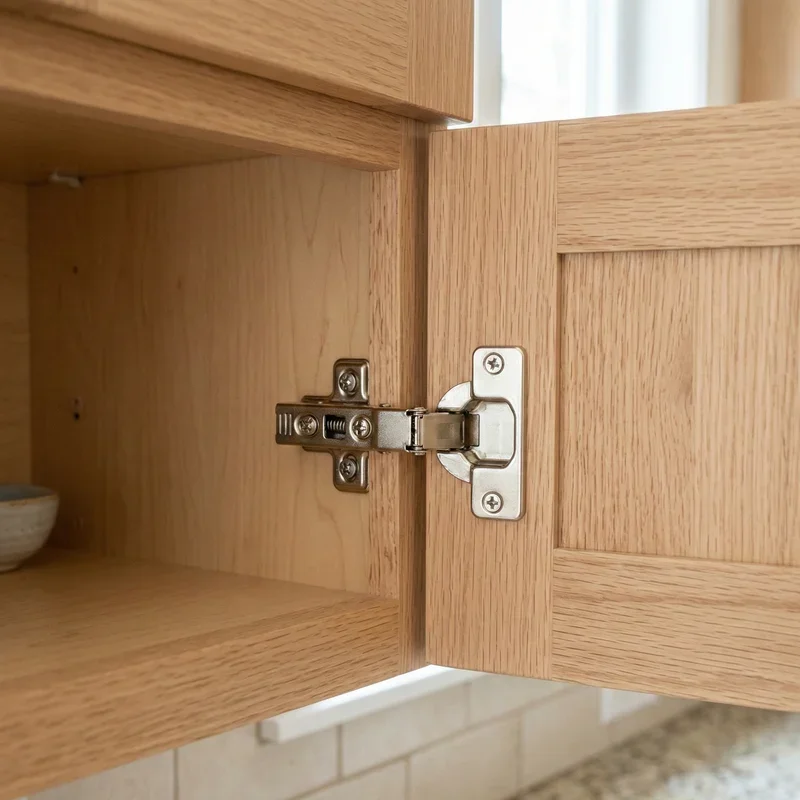
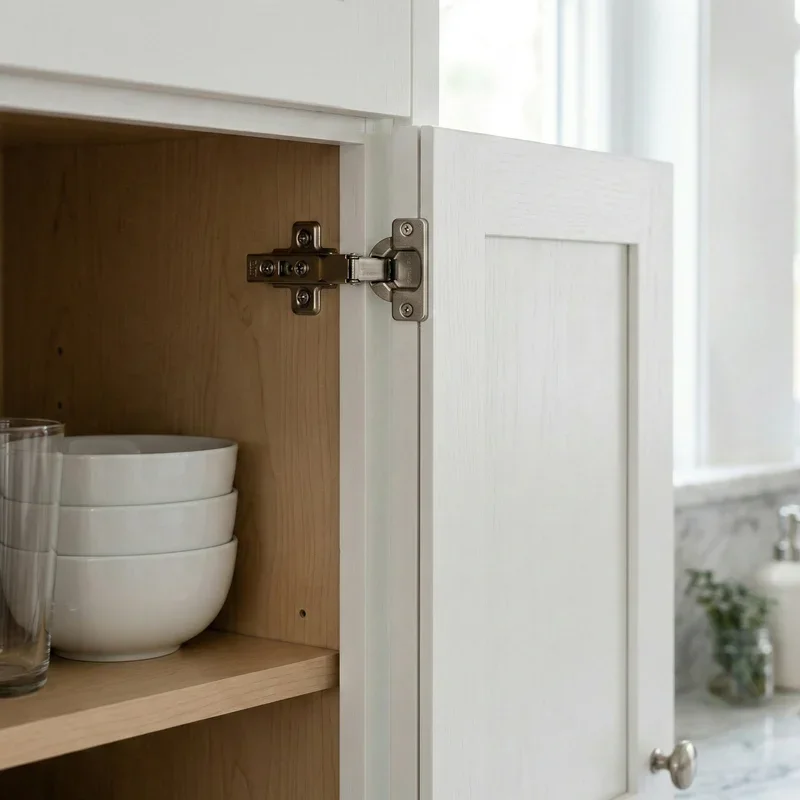
What Is Overlay on Cabinet Hinges? Explained
Learn what is overlay on cabinet hinges explained simply. Understand full, half, and inset overlay types for your kitchen project.
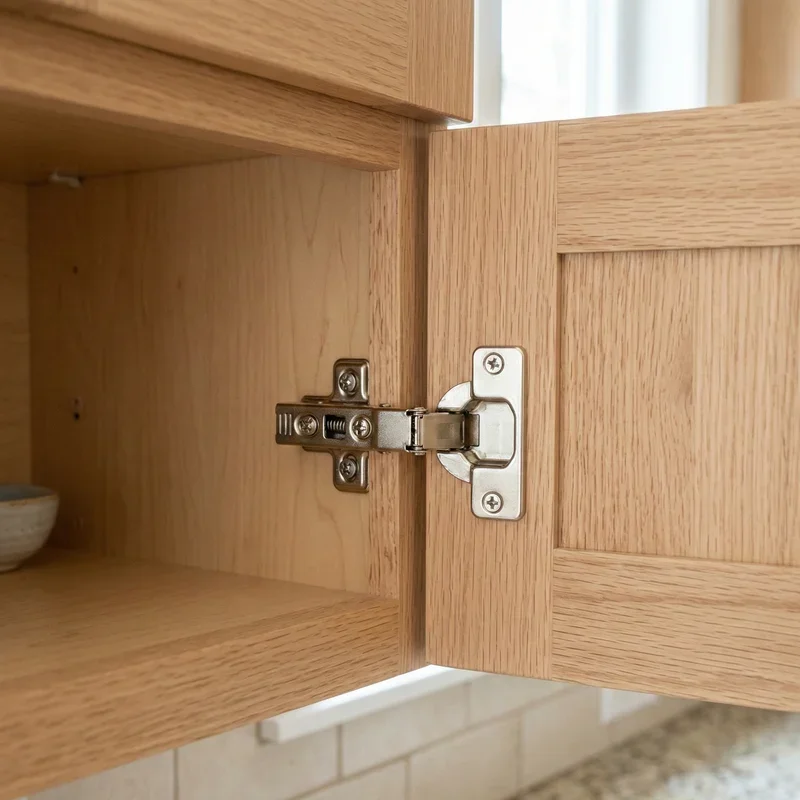
You've decided to update your kitchen cabinets, either replacing hinges on existing doors or planning a complete renovation. Everything seems straightforward until you start shopping for hardware and suddenly encounter a barrage of unfamiliar terminology. Full overlay, half overlay, partial overlay, inset. What do any of these terms actually mean, and why does it matter which one you choose?
If you've ever stood in the hardware store aisle feeling completely overwhelmed by hinge options, you're definitely not alone. Cabinet hinge terminology can feel like learning a foreign language, especially when sales associates start throwing around measurements and technical specifications like everyone should instinctively understand them.
Here's the reality that makes this confusing situation even more frustrating. Choosing the wrong overlay type means your cabinet doors won't work properly. They might not close correctly, could interfere with adjacent doors, or simply look wrong once installed. Getting this detail right actually matters quite a bit.
Understanding what is overlay on cabinet hinges explained in plain English transforms a confusing shopping experience into a confident purchase decision. The concept itself isn't complicated once someone breaks it down without all the industry jargon.
This comprehensive guide will demystify overlay terminology completely. We'll explain what overlay means, explore the different types you'll encounter, help you identify what your cabinets currently have, and guide you toward selecting the right hinges for your specific project.
By the time you finish reading, you'll understand overlay well enough to confidently shop for hinges, communicate with contractors, or tackle your own cabinet installation without second-guessing yourself.
Understanding Overlay Basics
Let's start with the fundamental concept before diving into specific types.
What Overlay Actually Means
Overlay refers to how much your cabinet door covers, or overlays, the cabinet frame opening when closed. It's essentially describing the relationship between door size and the visible face frame or cabinet box behind it.
When you look at closed cabinet doors, you might notice how they relate to the cabinet structure. Some doors appear to sit flush within the frame opening. Others cover most of the frame, leaving just a thin strip visible. Still others cover the frame entirely.
These different appearances result from different overlay configurations. The hinge you select must match your specific overlay situation for doors to function properly.
Why Overlay Matters
Overlay isn't just an aesthetic preference. It directly affects functionality, hardware requirements, and installation approaches.
Different overlay amounts require hinges engineered specifically for those configurations. Using the wrong hinge type results in doors that won't close flush, gaps that appear uneven, or doors that literally cannot physically function.
Additionally, overlay affects how your cabinets look as a complete installation. Consistent overlay throughout your kitchen creates a cohesive appearance while inconsistent overlay looks like mistakes were made.
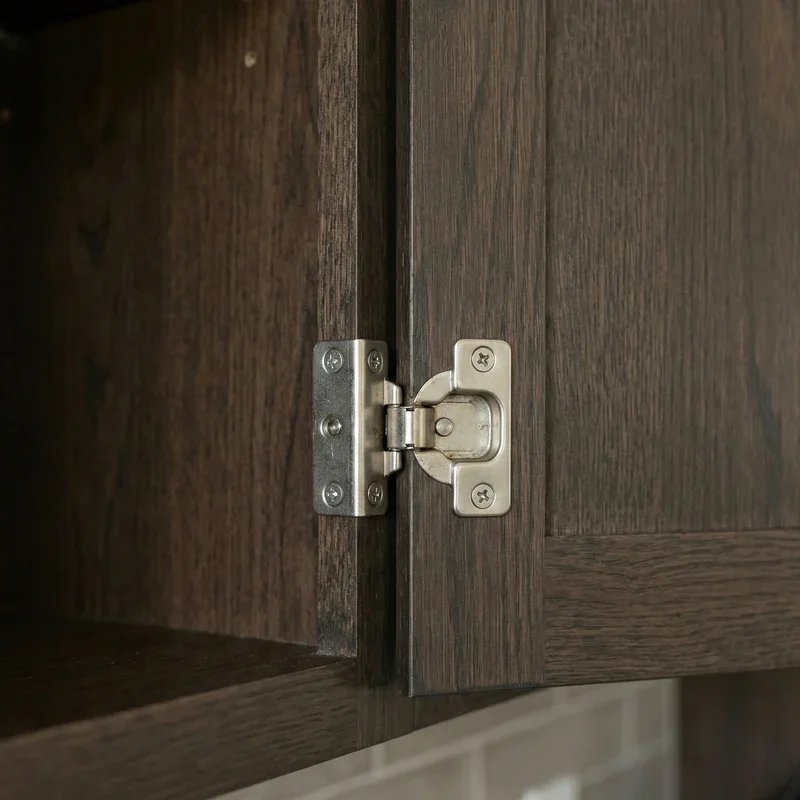
What Is Overlay on Cabinet Hinges? Explained by Type
Now let's examine the specific overlay categories you'll encounter when shopping.
Full Overlay Hinges
Full overlay represents the most common configuration in modern kitchen design. With full overlay, cabinet doors almost completely cover the face frame, leaving only tiny gaps between adjacent doors.
Typically, full overlay doors overlap the frame opening by one-half inch to three-quarters inch on each side. Looking at closed cabinets, you see mostly door surface with minimal visible frame.
This configuration creates a sleek, contemporary appearance that maximizes visual door space. The hardware hides almost completely, contributing to clean, uncluttered aesthetics.
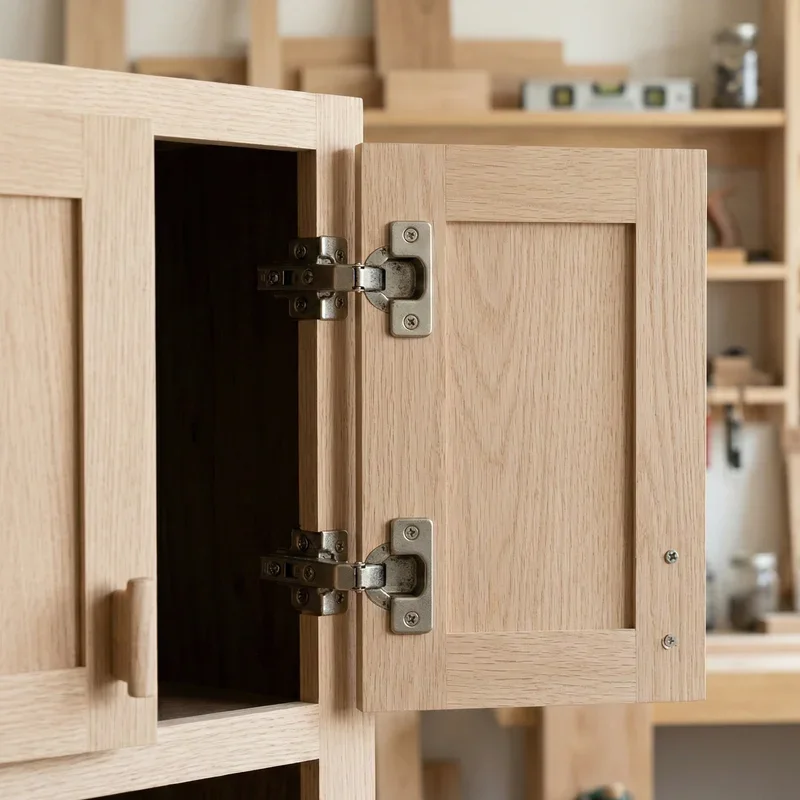
Full overlay hinges are designed with specific geometry allowing doors to swing away from the cabinet while closing flush against the frame. These hinges won't work for other overlay types because the door positioning calculations differ.
Half Overlay Hinges
Half overlay, sometimes called partial overlay, splits the frame between two adjacent doors. Each door covers half the frame width where they meet.
This configuration becomes necessary when two doors share a single face frame stile between them. Rather than both doors fighting for the same frame space, each covers its half.
Half overlay creates slightly more visible frame than full overlay. You'll notice larger gaps between doors, revealing more of the underlying cabinet structure.
The hinges for half overlay have different arm lengths and mounting positions than full overlay versions. They're engineered to position doors correctly for this specific overlap amount.
Inset Overlay Hinges
Inset, sometimes called zero overlay, describes doors that sit flush within the face frame opening rather than overlapping it at all.
With inset cabinets, the door surface aligns perfectly with the frame face, creating a completely flat front when closed. The door fits inside the frame opening like a picture in a frame.
This traditional style requires exceptionally precise construction because gaps between door and frame are highly visible. Even small variances become obvious defects.
Inset hinges mount differently than overlay types since the door must pivot from within the frame rather than covering it. Surface-mounted hinges were traditional for inset cabinets, though concealed options exist today.
Variable Overlay Options
Many European-style concealed hinges offer adjustable overlay within certain ranges. These hinges allow fine-tuning after installation to achieve perfect door alignment.
Variable overlay capability proves particularly valuable during installation when slight adjustments might be necessary to achieve consistent appearance across multiple cabinets.
This adjustability doesn't mean one hinge works for all overlay types. Each hinge has a specific range, perhaps adjustable from one-half inch to three-quarters inch overlay. You still need the right base hinge for your general overlay category.
Identifying Your Current Overlay
Before purchasing replacement hinges, you need to determine what overlay your cabinets currently use.
Measuring Overlay
Close a cabinet door and examine where the door edge sits relative to the frame opening.
Measure from the inside edge of the face frame to the door edge. This distance represents your overlay amount on that side.
Standard full overlay typically measures between one-half inch and five-eighths inch. Half overlay usually falls around one-quarter inch. Inset measures zero, with the door sitting inside the opening.
Visual Identification
Sometimes visual assessment provides quicker identification than precise measurement.
Full overlay cabinets show very little frame between doors. Gaps appear narrow, revealing minimal wood grain or finish from the underlying structure.
Half overlay reveals noticeably more frame, particularly where two doors meet at a shared stile. The frame becomes a visible design element rather than hidden structure.
Inset doors sit visibly within frame openings. The frame completely surrounds each door like a border, creating a distinctly traditional appearance.
Checking Multiple Locations
Overlay should be consistent throughout quality cabinet installations, but verify by checking several doors.
Measure both sides and top of various doors to confirm consistent overlay. Inconsistencies suggest past repairs using wrong hinges or original manufacturing issues.
Pay particular attention to corner cabinets and locations where doors meet at shared frame members. These spots sometimes differ from standard single-door configurations.
What Is Overlay on Cabinet Hinges? Explained Through Face Frame vs. Frameless
The presence or absence of face frames significantly affects overlay considerations.
Face Frame Construction
Traditional American cabinet construction includes a solid wood frame attached to the cabinet box front. Doors mount to this frame rather than directly to the cabinet box.
Face frame cabinets create overlay by doors covering various amounts of this frame. The frame provides mounting surface and structural rigidity while remaining partially or mostly hidden.
All three major overlay types, full, half, and inset, apply to face frame construction. Your overlay choice affects appearance and hinge requirements.
Frameless Cabinet Construction
European-style frameless cabinets, sometimes called full-access cabinets, lack the traditional face frame. Doors attach directly to cabinet box sides.
Frameless cabinets typically use full overlay by default since doors must cover the cabinet box edges. Without a frame to reveal, partial overlay configurations don't make practical sense.
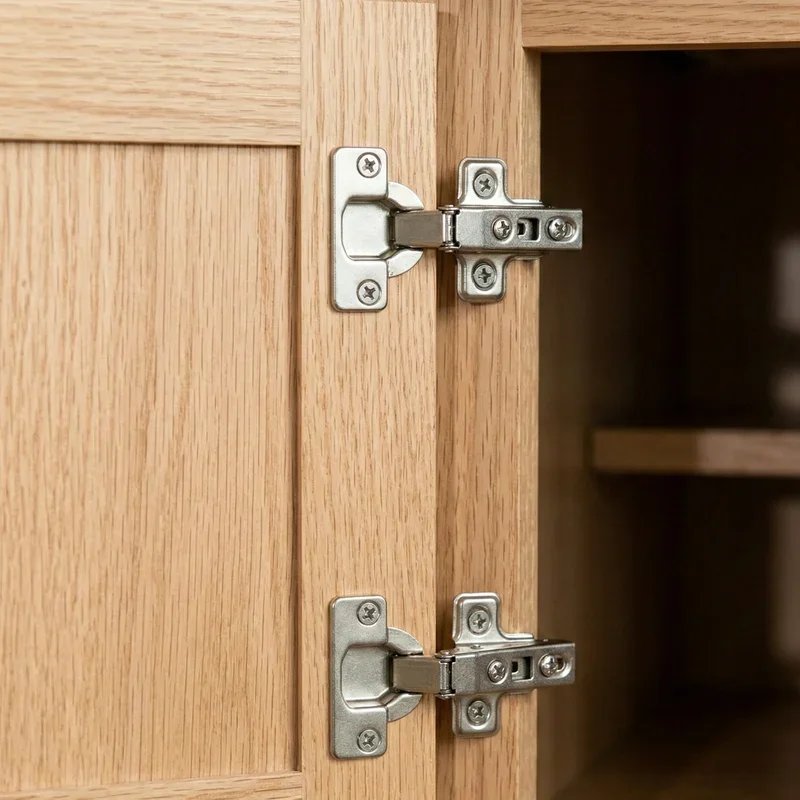
Frameless construction requires different hinge mounting approaches. Most frameless installations use European cup hinges that bore into the door and clip to mounting plates on cabinet sides.
Hinge Selection Implications
Knowing whether you have face frame or frameless cabinets narrows your hinge search significantly.
Face frame cabinets accept both traditional surface-mounted hinges and modern concealed hinges with face frame adapters.
Frameless cabinets virtually require European-style cup hinges designed specifically for this construction method.
Don't assume your cabinet construction type. Check inside an open cabinet to verify whether a face frame exists before purchasing hardware.
Common Overlay Measurements
Specific numbers help when shopping for hinges.
Standard Full Overlay
Full overlay hinges typically accommodate overlays ranging from one-half inch to three-quarters inch. Most manufacturers consider five-eighths inch as standard full overlay.
When ordering hinges, you might specify overlay amount precisely or select from ranges offered by the manufacturer. Adjustable hinges provide flexibility within their designated range.
Standard Half Overlay
Half overlay usually falls between one-quarter inch and three-eighths inch. The specific measurement depends on frame dimensions and door sizing.
Some manufacturers offer hinges labeled for specific half overlay amounts while others provide adjustable ranges spanning typical half overlay dimensions.
Inset Specifications
Inset technically means zero overlay, but even inset installations require small gaps for door clearance during opening and closing.
Inset hinges must account for this clearance requirement while positioning doors flush with frame faces. Gap specifications typically range from one-sixteenth to one-eighth inch.
Selecting the Right Hinges
Armed with overlay knowledge, you're ready to shop confidently.
Matching Existing Cabinets
For hinge replacement on existing cabinets, your goal is matching current overlay exactly.
Measure carefully, then search for hinges specifying that overlay amount. Replacement hinges should position doors identically to original hardware.
Consider upgrading to adjustable hinges even when replacing fixed-position types. The adjustment capability makes installation easier and allows future fine-tuning.
New Cabinet Installation
For new cabinets, overlay choice affects both hinge selection and door sizing.
Decide your desired appearance first. Contemporary kitchens typically favor full overlay while traditional styles might choose inset or partial overlay.
Communicate overlay requirements clearly to cabinet makers or verify overlay specifications when purchasing prefabricated cabinets. Door dimensions must coordinate with intended overlay.
Quality Considerations
Beyond overlay specifications, hinge quality affects long-term performance.
Better hinges feature soft-close mechanisms that prevent slamming. Three-way adjustability, allowing movement side-to-side, up-and-down, and in-and-out, simplifies installation and maintenance.
Don't sacrifice quality for price on hinges. These small components bear the weight and motion stress of hundreds of thousands of door cycles over cabinet lifetime.
Troubleshooting Overlay Problems
Common issues often trace back to overlay mismatches.
Doors Won't Close Properly
If doors don't close flush against frames, the overlay setting might be wrong.
Check whether adjustment screws can bring doors into proper position. If adjustment range is exhausted, the base hinge might be wrong for your overlay.
Uneven Gaps Between Doors
Inconsistent gaps between adjacent doors indicate overlay variations.
Compare overlay measurements across problematic doors. Different hinges or mounting positions might be creating inconsistent overlay amounts.
Doors Hitting Each Other
Doors that interfere when opening or closing might have excessive overlay.
Reduce overlay through adjustment or replace hinges with ones designed for less overlap. Adjacent doors need clearance throughout their swing arc.
Professional Installation Considerations
Sometimes professional help makes sense.
When to Call a Pro
Complex overlay situations, unusual cabinet configurations, or complete kitchen renovations might warrant professional assistance.
Cabinet installers understand overlay intricacies and can troubleshoot problems efficiently. Their experience prevents trial-and-error frustration.
Communicating with Contractors
Knowing overlay terminology helps you communicate effectively with professionals.
Describe your current overlay or desired outcome using proper terms. This clarity prevents misunderstandings and ensures you get expected results.
Ask contractors to explain their overlay recommendations. Understanding their reasoning helps you make informed decisions.
Conclusion
Understanding what is overlay on cabinet hinges explained in practical terms empowers confident decision-making for any cabinet project. Overlay simply describes how much cabinet doors cover the underlying frame, with full, half, and inset representing the primary categories. Matching hinges to your specific overlay ensures proper door function and consistent appearance throughout your installation. Taking time to measure existing overlay or plan new configurations carefully prevents frustrating hardware mismatches that waste both time and money.
Read next: 15 Play Area in Living Room Ideas That Blend Decor
Frequently Asked Questions
1.How do I measure the overlay on my existing cabinet doors?
Measure from the inside frame edge to the door edge while the door is closed.
2.Can I use full overlay hinges for half overlay cabinets?
No, hinges must match your overlay type for doors to function and align properly.
3.What is the most popular overlay type for modern kitchens?
Full overlay dominates contemporary kitchen design, creating sleek appearances with minimal visible frame.
4.Do frameless cabinets use the same overlay terminology?
Frameless cabinets typically use full overlay only since no face frame exists to partially reveal.
5.Can adjustable hinges work for different overlay types?
Adjustable hinges work within specific ranges but cannot switch between major overlay categories.
Stay up to date with our latest ideas!