15 Ottoman as Coffee Table Ideas for Stylish Living Rooms
Discover 15 ottoman as coffee table ideas for stylish living rooms that add soft, versatile, multi-functional elegance to your seating area.
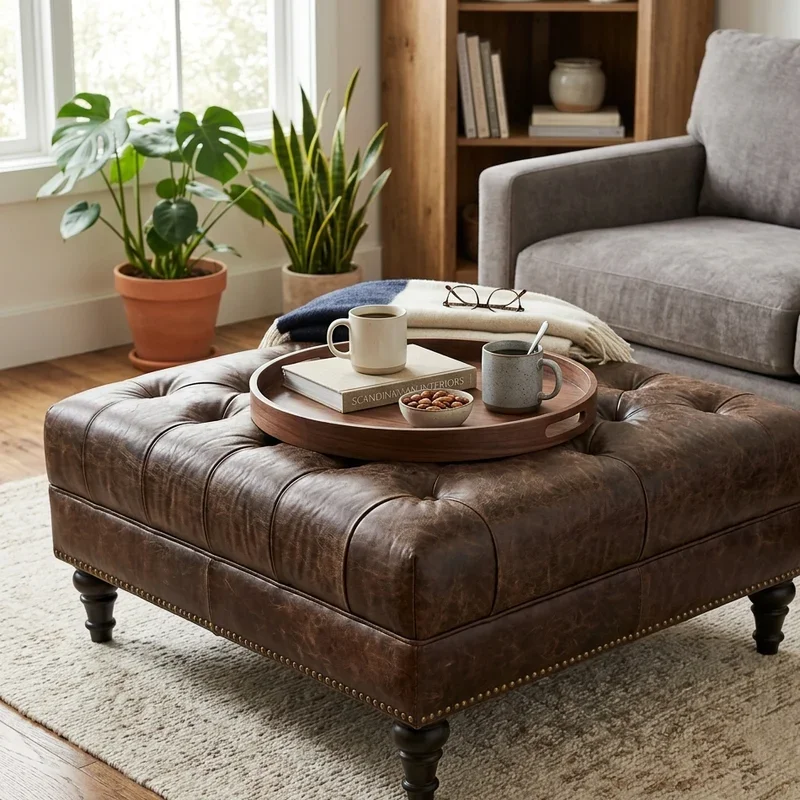
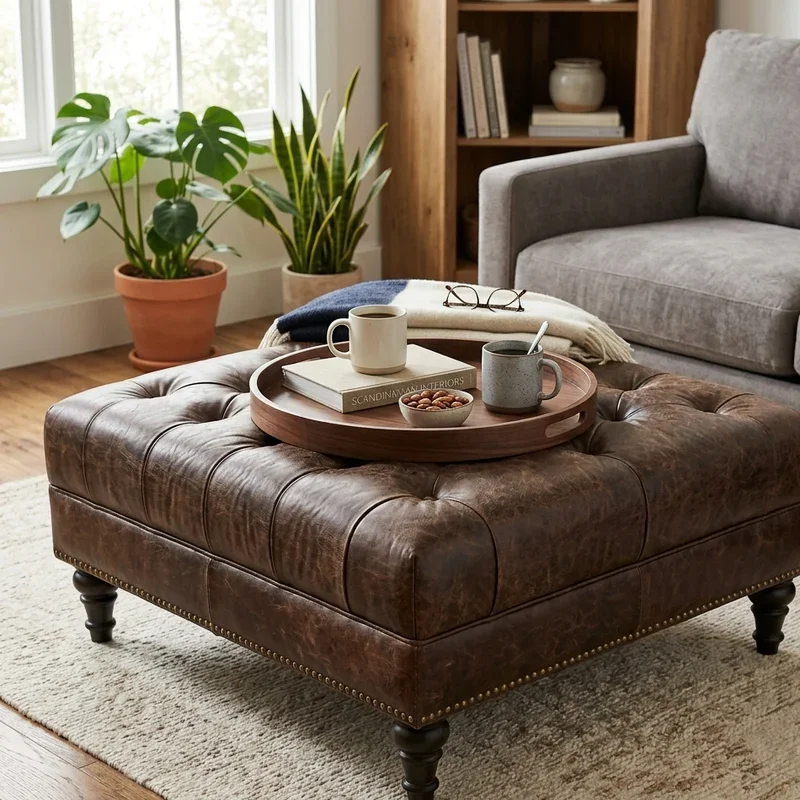
An ottoman replacing the traditional coffee table delivers the soft, cushioned, feet-up-friendly living room centerpiece that rigid, hard-surfaced, shin-bruising conventional tables provide functionally but never match for the kind of barefoot-touching, kid-safe, nap-inviting, legs-resting-on-it comfort that upholstered alternatives add to living rooms where relaxation matters more than the perfectly flat, drink-stable, magazine-stacking surface that glass or wood tables deliver through their hard, unforgiving, don't-put-your-feet-on-that functionality prioritizing object placement over human comfort. Have you ever curled up on your sofa, stretched your legs toward the coffee table, and wished the surface your feet landed on felt soft instead of cold, flat, and decidedly uncomfortable? Ottomans solve that beautifully. Let's explore fifteen ideas.
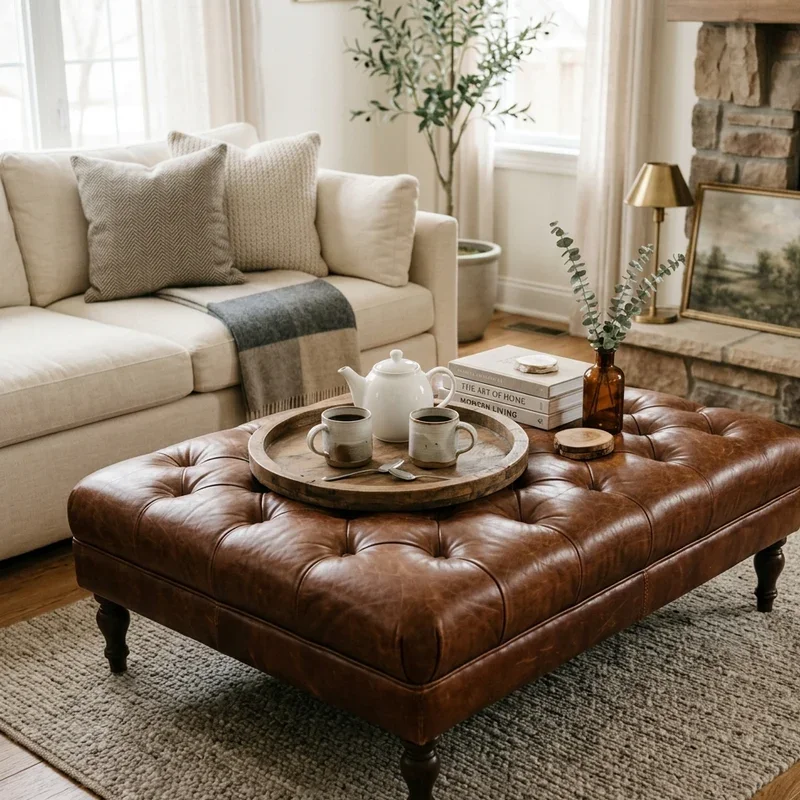
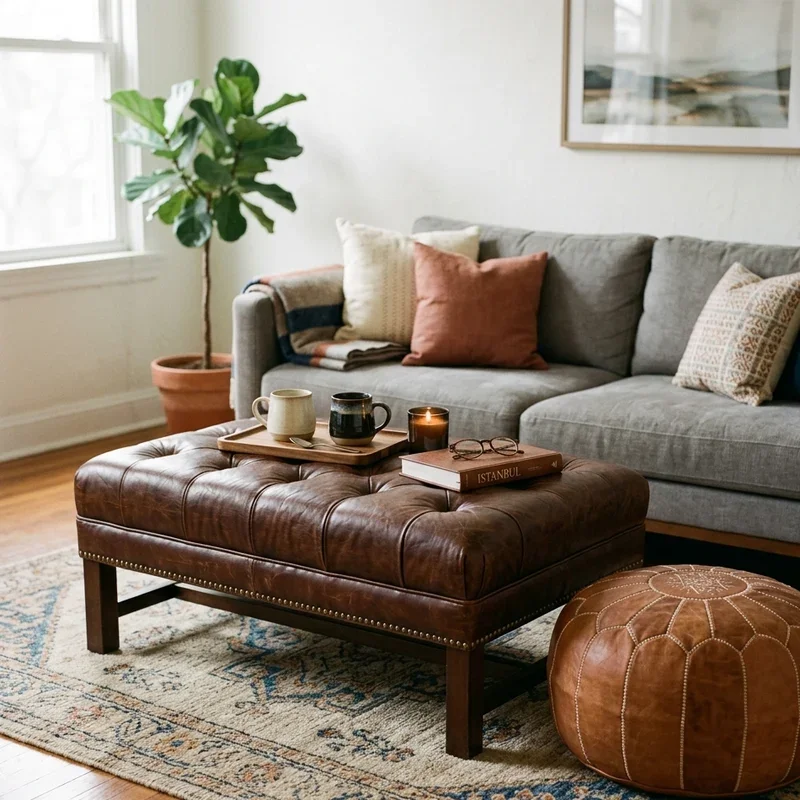
1. Tufted Leather Ottoman
A tufted leather ottoman brings classic, library-inspired, gentlemen's-club sophistication to your living room center, where the deep button tufting creates the dimensional, quilted, visually rich surface texture that flat, un-tufted, personality-free upholstery delivers smoothly but tufted leather alternatives amplify dramatically through their shadowed, buttoned, old-money aesthetic channeling decades of established design tradition into one substantial, room-anchoring, conversation-starting centerpiece. Choose a large, square or rectangular tufted leather ottoman in rich brown, cognac, or black, since the classic tones complement virtually every living room palette. Add a decorative tray for drink stability. Include casters for easy repositioning. Select full-grain leather for lasting beauty. Think of tufted leather like sophisticated gentlemen's club furniture. Your living room centers with timeless elegance.
2. Storage Ottoman with Tray
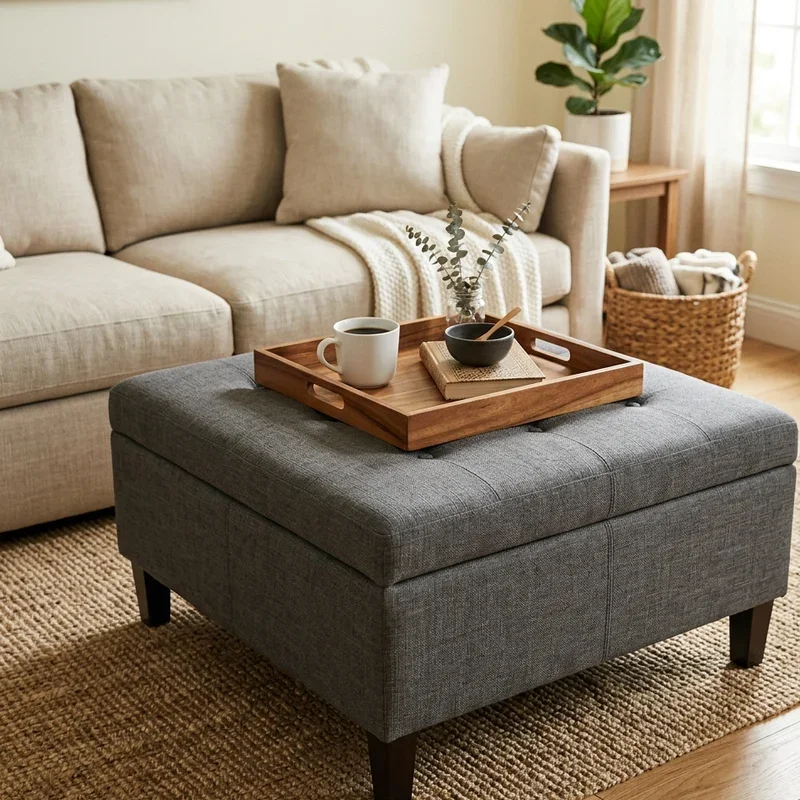
A storage ottoman with a removable tray delivers the triple-threat functionality where one piece serves as coffee table surface when the tray sits on top, hidden storage when the lid lifts to reveal interior compartment space, and comfortable footrest when the tray removes and your tired legs claim the cushioned surface after long days demanding the foot-elevating, shoe-removing, just-let-me-rest-my-legs relief that hard coffee tables deny through their shin-level, feet-sliding, decidedly-not-comfortable rigid surfaces. Choose a storage ottoman with a flat, stable lid that doubles as a tray-holding surface, since the firm top prevents the tippy, unstable, drinks-sliding-off disasters that domed or overstuffed tops create. Store blankets and remotes inside. Add a styled tray on top. Think of storage ottomans like furniture Swiss Army knives. Your centerpiece serves three purposes.
3. Round Upholstered Ottoman
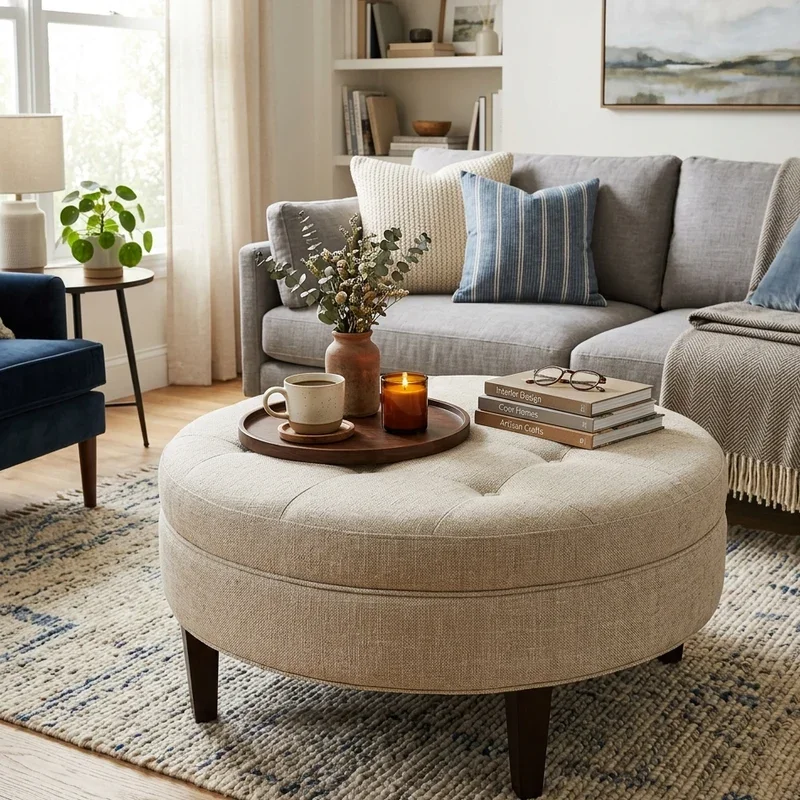
A round upholstered ottoman softens the living room's geometry by introducing a curved, corner-free centerpiece that breaks the rectangular monotony of squared sofas, angular end tables, and straight-edged everything-else that most living rooms accumulate through their default, rectangular-furniture-only shopping habits creating rooms filled with sharp angles, ninety-degree corners, and the straight-line visual rigidity that one curved, soft-cornered, injury-free ottoman interrupts beautifully through its geometry-breaking circular profile. Choose a large round ottoman in a neutral, textured fabric, since the circular shape creates equal access from every surrounding seating position while the soft edge eliminates the shin-banging, toe-stubbing, child-forehead-hitting dangers that sharp-cornered tables present through their protruding, injury-causing angular edges. Add a round tray on top. Think of round ottomans like soft geometry lessons. Your room curves gently.
4. Woven Basket Ottoman
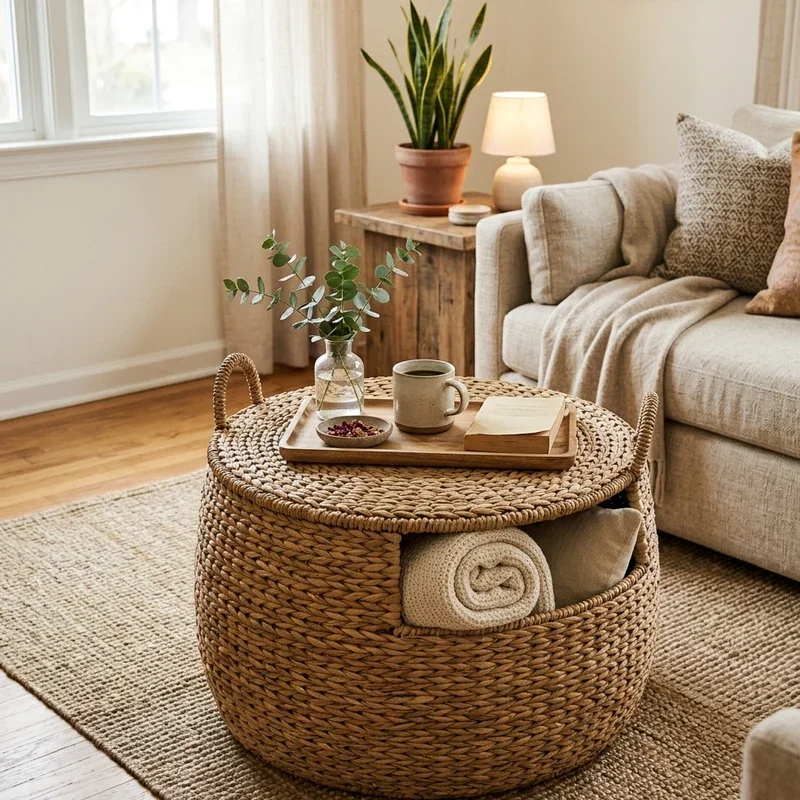
A woven basket ottoman brings natural, artisanal, handcrafted texture to your living room center through the organic, tactile, visually warm material character that smooth, manufactured, texture-free upholstered alternatives deliver cleanly but woven alternatives enrich through their visible, fiber-by-fiber, hand-built construction carrying the genuine artisan craftsmanship that mass-produced furniture lacks through its identical, factory-stamped, personality-free uniformity shared by thousands of other buyers who all received the exact same machine-assembled product. Choose a large woven seagrass, rattan, or jute ottoman with a flat, stable top, since the natural fiber surface adds textured warmth while the rigid construction supports a tray for drinks and decor. Add a cushion on top for softness. Choose natural tones. Think of basket ottomans like handwoven centerpieces. Your room gains artisan warmth.
5. Velvet Statement Ottoman
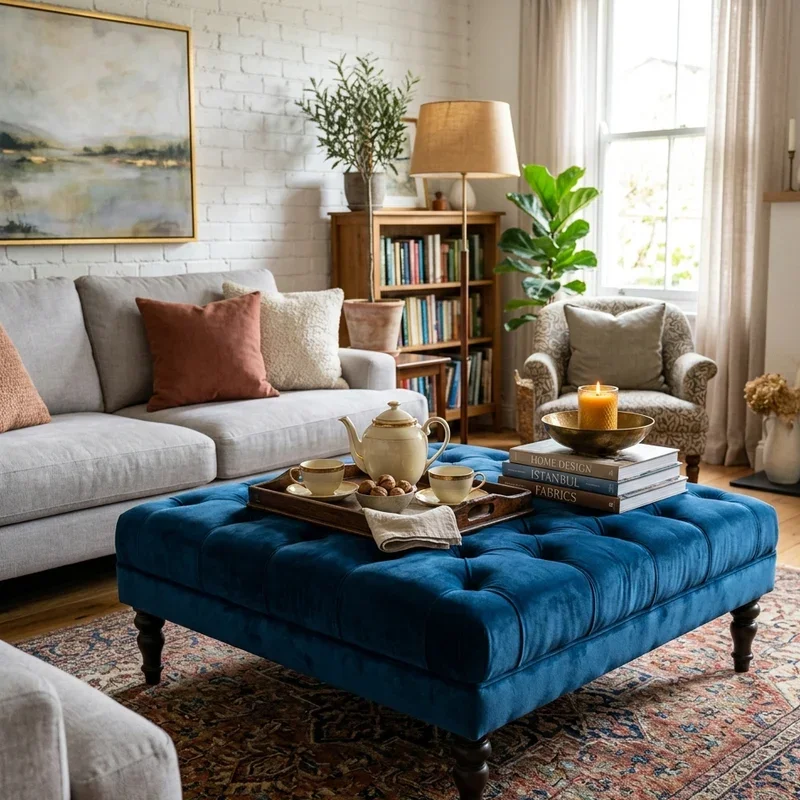
A velvet statement ottoman wraps your living room centerpiece in luxurious, light-catching, touchably soft fabric that transforms the central seating zone from ordinary furniture arrangement into genuinely glamorous, visually rich, Instagram-worthy interior design where the jewel-toned or neutral velvet surface catches every light source in the room, shifting color subtly across its pile depending on viewing angle, ambient lighting, and the time of day your eyes happen to land on its shimmering, constantly changing, endlessly interesting textile surface. Choose a velvet ottoman in emerald, navy, blush, or mustard, since the jewel tones create dramatic, room-defining focal points while the plush surface invites touch. Add metallic-toned legs for glamorous detail. Include a styled tray. Think of velvet ottomans like luxury fabric jewels. Your center glows with richness.
6. Oversized Square Ottoman
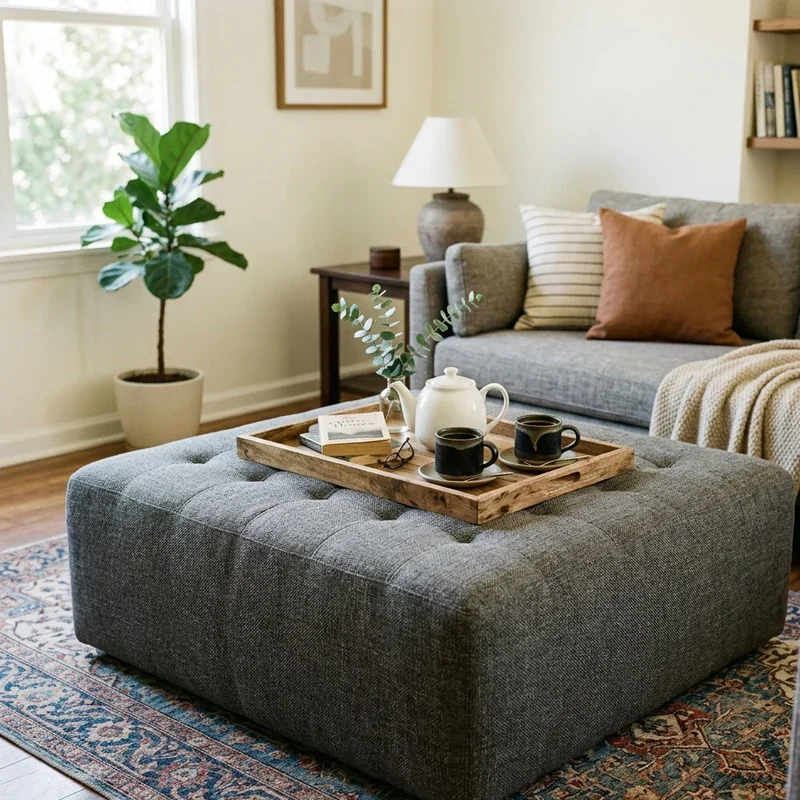
An oversized square ottoman fills the center of your seating arrangement with a generously proportioned, floor-commanding, everyone-can-reach-it surface large enough that multiple people rest their feet simultaneously without the territorial, that's-my-side, your-legs-are-on-my-half negotiations that undersized ottomans provoke through their limited, barely-fits-two-pairs-of-feet, someone-always-loses surface area forcing compromised, partially-supported, only-one-person-gets-the-good-spot foot-resting arrangements among competing, tired-legged, everybody-wants-the-ottoman living room occupants. Choose an ottoman at least forty inches square, since the generous proportions accommodate the entire seating group's foot-resting needs while the substantial surface supports a large tray for functional coffee table use. Select durable, stain-resistant upholstery. Add a flat cushion top. Think of oversized ottomans like cushioned platforms for everyone. Your whole family rests simultaneously.
7. Dual Ottoman Pair
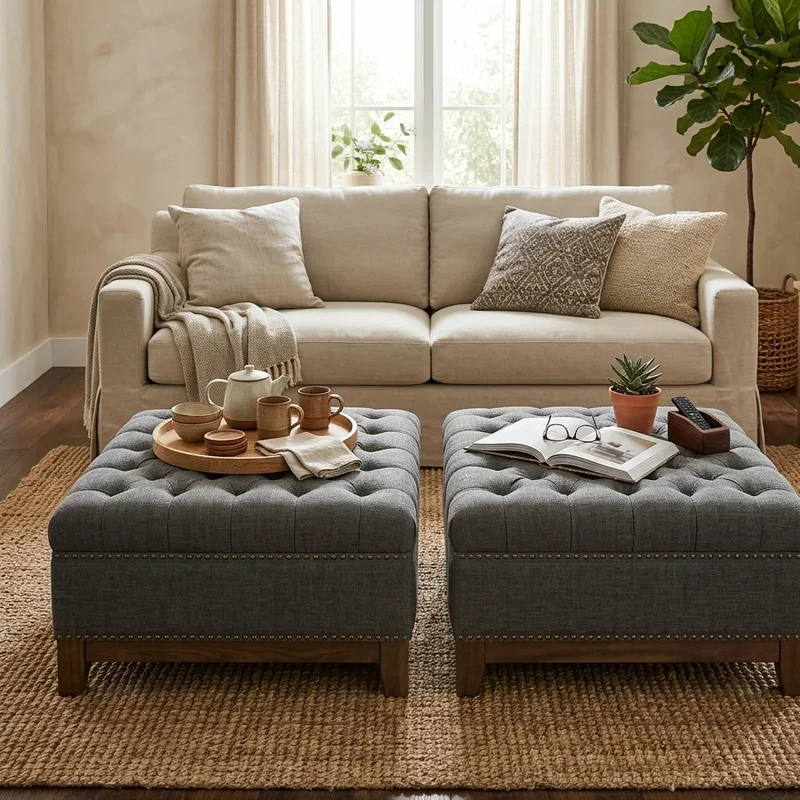
A dual ottoman pair positions two smaller, matching ottomans side by side as your coffee table alternative, creating the flexible, separable, rearrange-whenever-you-want configuration that single, large, heavy, cannot-easily-move-it ottomans deliver as permanent fixtures but paired alternatives provide as adaptable, pull-apart, use-independently-or-together versatile furniture units serving together as a coffee table surface or apart as individual seats, footrests, or pulled-beside-the-sofa side tables throughout varied daily configurations responding to different household needs occurring between morning coffee and evening movie watching. Choose two identical, small square or round ottomans that nest together to form one larger surface, since the paired arrangement creates flexible, reconfigurable living room geometry. Pull apart for additional seating. Push together for table function. Think of ottoman pairs like modular furniture systems. Your center reconfigures.
8. Kilim Covered Ottoman
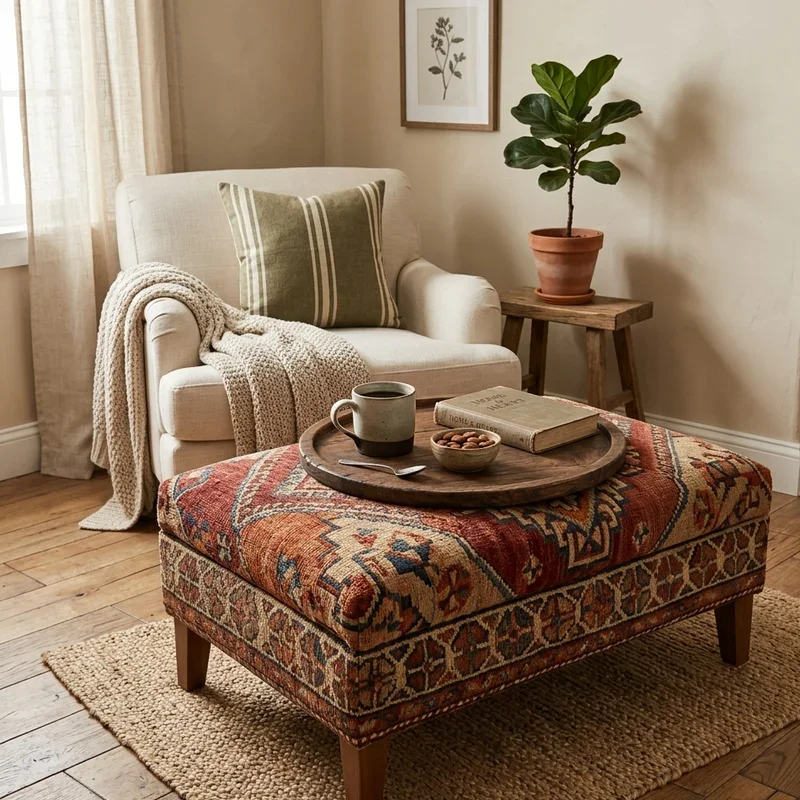
A kilim covered ottoman wraps your living room centerpiece in antique or reproduction tribal textile, where the handwoven, geometrically patterned, culturally rich fabric carries centuries of artistic tradition into your contemporary living space through the bold, earth-toned, story-telling patterns that factory-produced, commercially designed, zero-cultural-significance modern upholstery fabrics deliver attractively but kilim alternatives deliver meaningfully through their genuine, weaver-specific, tradition-carrying, geographically traceable textile heritage visible in every knotted, hand-dyed, individually unique pattern across the ottoman's wrapped, displayed, centerpiece-positioned surface. Choose an ottoman upholstered in vintage or reproduction kilim textile, since the flat-weave material provides durable, beautiful, conversation-starting surface coverage. Select warm earth tones. Pair with neutral surrounding furniture. Add a small tray. Think of kilim ottomans like wearable art for furniture. Your center tells cultural stories.
9. Leather Pouf Ottoman
Leather pouf ottomans bring Moroccan-inspired, handstitched, globally-influenced artisan character to your living room floor, where the round, cushion-like, sits-directly-on-the-ground leather form creates the casual, bohemian, floor-level centerpiece that legged, elevated, standard-height ottomans deliver conventionally but poufs provide alternatively through their ground-hugging, leg-free, relaxed-vibe, low-profile positioning adding the laid-back, shoes-off, everybody-sit-on-the-floor casual energy that formal, structured, sit-upright furniture arrangements sometimes lack through their rigid, posture-demanding, get-comfortable-within-these-parameters seating prescription. Choose one large or two to three smaller leather poufs as your coffee table alternative, since the grouped arrangement creates a flexible, ground-level, kid-friendly centerpiece. Select hand-stitched Moroccan-style poufs. Stuff firmly for stability. Add a small tray. Think of poufs like global artisan pillows for your floor. Your living room grounds casually.
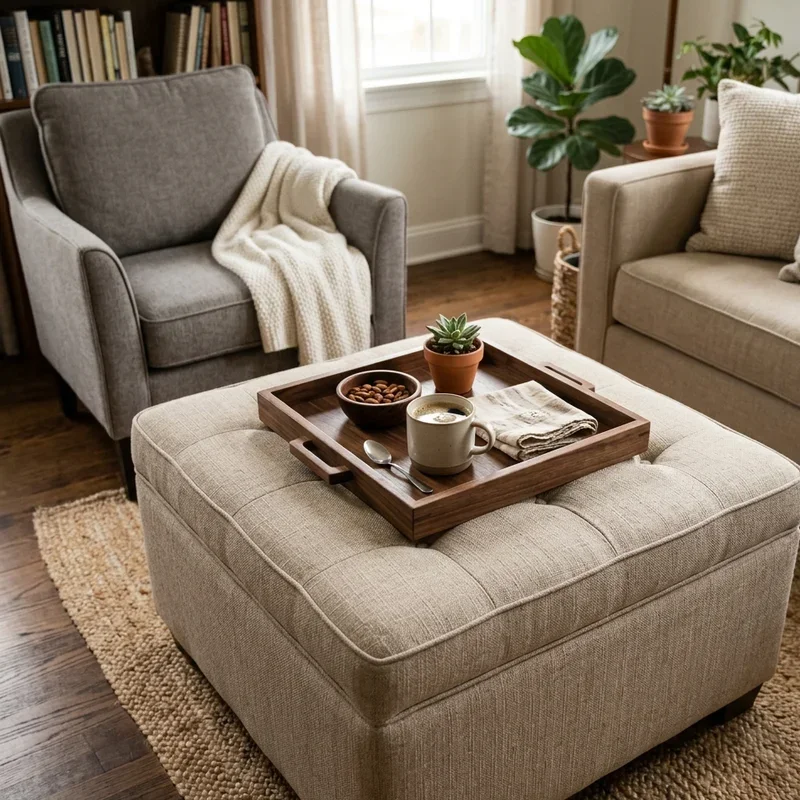
10. Ottoman with Wooden Tray Top
An ottoman with a permanently placed wooden tray on top creates the hybrid furniture piece solving the ottoman-versus-coffee-table debate by delivering both simultaneously, where the soft, cushioned ottoman base provides foot-resting comfort while the rigid, flat, drink-stable wooden tray surface delivers the practical, spill-preventing, level-surfaced functionality that pure ottomans lack through their soft, sloped, objects-sliding-off upholstered tops preventing stable cup placement without the tray intervention that this combined, best-of-both, nobody-compromises solution provides through its dual-surface, dual-function, dual-purpose design. Place a large, flat wooden tray across the ottoman top, since the rigid surface creates a stable platform for drinks, books, and decor while the cushioned ottoman beneath maintains its foot-resting comfort. Choose a tray matching your wood tones. Style with candles and books. Think of tray-topped ottomans like having both furniture pieces simultaneously. Your surface serves everything.
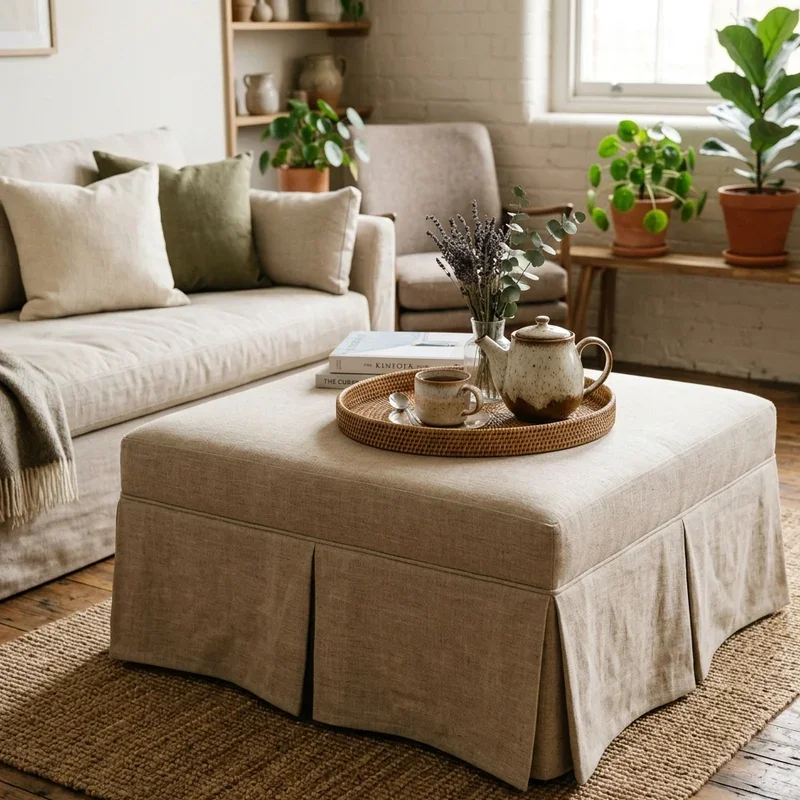
11. Skirted Linen Ottoman
A skirted linen ottoman drapes flowing fabric from the cushion top to the floor, concealing the legs, frame, and any storage beneath while creating the soft, romantic, traditional, everything-hidden-beneath-flowing-fabric aesthetic that exposed-leg, frame-visible, structurally-honest ottoman styles deliver transparently but skirted alternatives present differently through their fabric-veiled, mystery-maintaining, what's-underneath-nobody-sees draped presentation adding the gentle, feminine, traditional-living-room softness that clean-lined, modern, everything-exposed contemporary alternatives deliberately strip away through their minimalist, nothing-hidden design philosophy. Choose a skirted ottoman in natural linen, since the breathable, textured fabric adds relaxed, lived-in sophistication while the floor-length skirt conceals storage bins you tuck beneath. Add a tailored or gathered skirt style. Top with a tray. Think of skirted ottomans like furniture wearing flowing gowns. Your center hides elegantly.
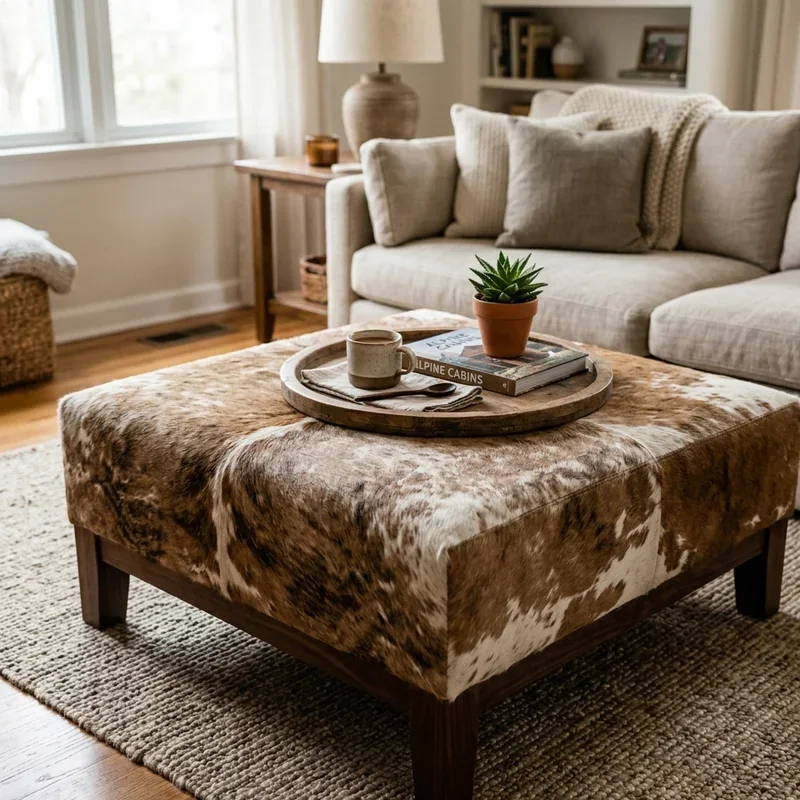
12. Cowhide Ottoman
A cowhide ottoman adds Western, rustic, or modern-eclectic character to your living room center through the natural, unique, no-two-are-identical hide surface where every brown, white, and black marking pattern reflects the individual animal's original coat coloring translated permanently onto the furniture's most visible, most touched, most prominently positioned surface occupying the exact center of your seating arrangement where every guest notices the distinctive, conversation-starting, genuinely natural pattern unlike anything factory-produced, commercially dyed, artificially patterned upholstery ever produces through its controlled, predetermined, designed-by-committee predictable surface appearance. Choose a cowhide ottoman in natural markings, since the organic pattern adds visual interest that solid upholstery misses through its uniform, same-everywhere consistency. Select a square or rectangular shape. Add a small tray. Pair with leather or wooden furniture. Think of cowhide like natural art on your centerpiece. Your ottoman wears nature's design.
13. Nesting Ottoman Set
A nesting ottoman set stacks two or three graduated-size ottomans together as one unit, then separates them into individual pieces when additional seating, footrests, or surface area demands more furniture than the single, largest ottoman provides alone within the living room's variable, sometimes-needs-more, sometimes-needs-less daily configuration requirements shifting between solo Tuesday evenings requiring one ottoman and Saturday gatherings needing three scattered across the room serving different guests in different locations simultaneously without requiring permanent, always-occupying-floor-space furniture commitment for the additional pieces. Choose a set of two or three nesting ottomans in graduated sizes, since the stacked configuration saves space during non-entertaining hours while the separated pieces serve varied needs. Select matching upholstery. Pull apart for guests. Stack when finished. Think of nesting sets like ottoman families living inside each other. Your options multiply.
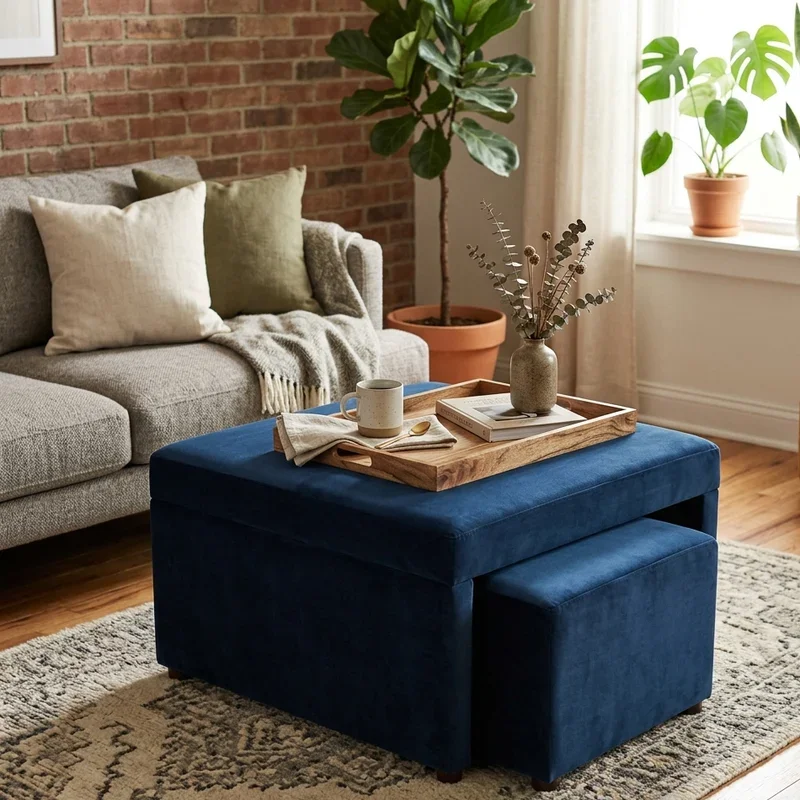
14. Channel-Tufted Ottoman
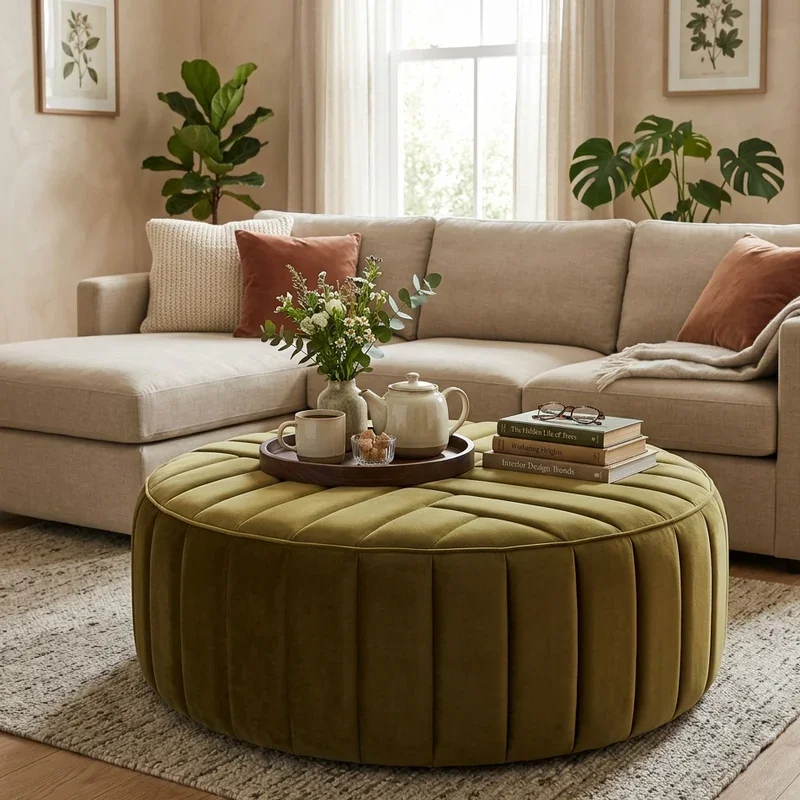
A channel-tufted ottoman adds linear, vertical, or horizontal stitched channels across the upholstered surface, creating the structured, sophisticated, Art Deco-inspired textural pattern that flat, un-tufted, pattern-free upholstery delivers smoothly but channel-tufted alternatives enrich through their visible, rhythmic, light-catching linear grooves adding dimensional, shadow-creating, architecturally detailed surface character to the centerpiece occupying your living room's most prominent, most viewed furniture position. Choose a channel-tufted ottoman with deep, evenly spaced vertical or horizontal channels, since the linear grooves create the structured elegance that defines the style while the channel depth determines the dramatic, shadow-depth intensity. Select velvet or leather for maximum channel definition. Choose a rectangular shape. Add a styled tray. Think of channel tufting like architectural lines stitched into fabric. Your ottoman structures beautifully.
15. Ottoman with Lower Shelf
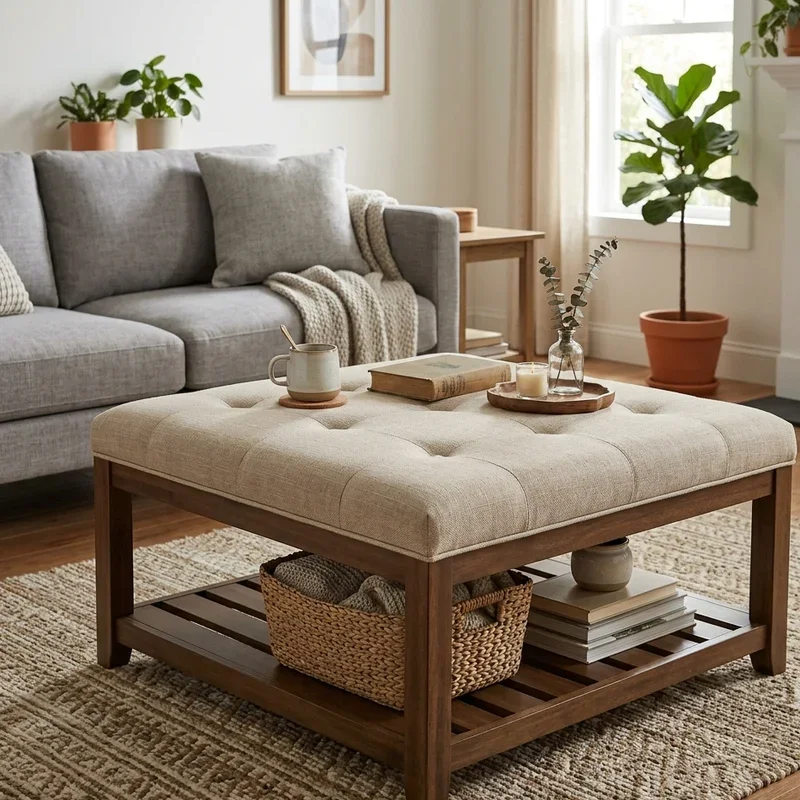
An ottoman with a built-in lower shelf adds a secondary surface beneath the cushioned top, creating the dual-level, books-on-the-bottom, tray-on-top functional furniture piece that single-surface ottomans provide at one height but shelf-equipped alternatives double through their additional, always-accessible, display-and-store-capable second surface holding books, magazines, baskets, and decorative objects within the ottoman's own footprint without requiring any additional floor space beyond what the cushioned top already occupies at its primary, feet-resting, tray-supporting, everyone-interacts-with-it height. Choose an ottoman with a slatted or solid shelf connecting the legs at approximately six inches from the floor, since the lower surface accommodates stacked books and small baskets. Style the shelf with curated objects. Keep the top surface functional with a tray. Think of shelved ottomans like double-decker coffee tables. Your centerpiece stores below.
Conclusion
Ottoman as coffee table ideas prove that soft, upholstered centerpieces deliver the comfort, versatility, and family-friendly functionality that traditional hard-surfaced coffee tables provide structurally but never match for the kind of feet-up, kid-safe, looks-beautiful, serves-multiple-purposes living room experience that modern households genuinely need from the one piece of furniture occupying their seating area's most central, most used, most important position. These fifteen ideas span tufted leather to nesting sets, matching every living room style and functional need. Whether you choose a storage ottoman or a velvet statement piece, soft centerpieces transform living rooms. Start shopping for your ottoman today.
Read next: 15 Coffee Table Color Ideas for Stylish Living Rooms
Frequently Asked Questions
Q1: Can an ottoman really replace a coffee table?
A: Yes, adding a sturdy tray on top provides the stable surface needed for drinks, books, and decor.
Q2: What size ottoman works best as a coffee table?
A: Choose an ottoman approximately two-thirds the length of your sofa for properly proportioned living room balance.
Q3: How do I keep drinks stable on an ottoman?
A: Use a large, flat, rigid tray on the ottoman surface creating a stable, level platform for cups and glasses.
Q4: Are ottomans safe for families with small children?
A: Absolutely, soft, corner-free ottomans eliminate the sharp-edge injury risks that traditional hard coffee tables present dangerously.
Q5: What ottoman fabric holds up best for daily coffee table use?
A: Performance fabrics, leather, and treated microfiber resist stains and wear best for high-use living room centerpiece duty.
Stay up to date with our latest ideas!