How to Get Wrinkles Out of a Rug Easily at Home
Learn how to get wrinkles out of a rug easily at home with simple DIY methods that flatten bumps and restore your rug beautifully.
You just unrolled a brand new rug, spread it across your living room floor, and stepped back to admire the transformation. But instead of lying perfectly flat like you imagined, the thing looks like a crumpled bedsheet with waves, bumps, and stubborn creases running in every direction. Well, that is a buzzkill if there ever was one.
Or maybe your rug has been sitting in the same spot for years and has recently started developing wrinkles and buckles that were not there before. Either way, a wrinkled rug is more than just an eyesore. It is a genuine tripping hazard, especially for kids, older family members, and pets who are not exactly watching where they are going.
The good news? You do not need to call in a professional or spend a fortune to fix this. "How to Get Wrinkles Out of a Rug Easily at Home" is one of those satisfying home improvement problems that you can absolutely tackle yourself with tools and supplies you probably already have lying around. And once you know the tricks, you will wonder why you ever put up with a lumpy rug in the first place. So let us flatten things out and get that rug looking the way it was meant to.
Why Do Rugs Get Wrinkles in the First Place
Understanding why your rug is wrinkling helps you pick the right fix and prevent the problem from coming back. There are actually quite a few reasons a rug might refuse to lie flat, and some of them might surprise you.
Shipping and Storage Folds
This is the number one culprit for new rugs. Most area rugs are rolled or folded for shipping, and they can spend weeks or even months in that compressed position inside a warehouse or delivery truck. All that time spent curled up creates memory in the fibers and backing, and when you finally unroll the rug, it wants to spring back into its rolled shape. Those waves and curls you see along the edges and across the surface are essentially the rug remembering its packaging position.
The good news is that shipping wrinkles are usually temporary. Given enough time and the right conditions, most new rugs will relax and flatten on their own. But "enough time" can mean anywhere from a few days to several weeks, and who wants to stare at a bumpy rug for that long? That is where our tricks come in handy.
Humidity and Moisture
Rugs are surprisingly sensitive to moisture levels in your home. High humidity can cause certain rug materials, especially natural fibers like wool, cotton, and jute, to absorb moisture from the air and swell slightly. This swelling causes the rug to expand unevenly, creating ripples and buckles across the surface.
On the flip side, a rug that gets wet from a spill, steam cleaning, or flooding can develop wrinkles as it dries unevenly. Different parts of the rug dry at different rates depending on air circulation, and this inconsistency leads to warping and bubbling that can be stubborn to fix.
Improper Rug Pad or No Pad at All
If your rug is sitting directly on a hard floor without a rug pad underneath, you are practically inviting wrinkles. Rug pads provide a grippy, cushioned layer that keeps the rug anchored in place and prevents the kind of shifting and bunching that leads to creases over time.
Using the wrong type of rug pad can also cause problems. A pad that is too thick might create an unstable surface that allows the rug to slide and bunch. A pad that is too thin might not provide enough grip to keep things flat. And a pad that is too large or too small for the rug creates uneven support that shows up as bumps and ridges on the surface.
Furniture Impressions and Heavy Traffic
Heavy furniture sitting on a rug for extended periods creates permanent dents and compressed areas. When you move that furniture, the surrounding rug material often buckles or ripples around the compressed zones. High-traffic areas can also develop wrinkles over time as the constant foot traffic stretches and shifts the rug fibers in one direction.
The Rug Material Itself
Some materials are simply more prone to wrinkling than others. Synthetic rugs made from polypropylene or nylon tend to develop heat-related wrinkles and can be tricky to flatten once they have set into a curved position. Natural fiber rugs like wool are more forgiving but can be affected by moisture. Flat-weave rugs and kilims are notorious for curling at the edges and developing ripples across their surface.
How to Get Wrinkles Out of a Rug Easily at Home: Method by Method
Now that you know what you are dealing with, let us walk through every effective method for getting those wrinkles out. We will start with the simplest approaches and work our way up to more hands-on techniques.
Reverse Rolling
This is the first thing you should try with a new rug that arrived rolled up. The concept is dead simple. You roll the rug in the opposite direction of how it was packaged, essentially training the fibers and backing to curve the other way.
Flip the rug upside down so the bottom is facing up. Starting from one end, roll it tightly in the direction opposite to its original roll. Secure it with some string or bungee cords so it does not unravel, and leave it like that for 24 to 48 hours. When you unroll it again, the competing curl from the reverse roll should cancel out the original curl, leaving you with a much flatter rug.
This method works especially well for thinner rugs and flat-weave styles. Thicker, plusher rugs might need a longer period in the reverse roll, or you might need to combine this technique with one of the other methods below.
Laying It Flat in the Sun
Sunshine is a surprisingly effective rug flattener. The warmth from the sun softens the fibers and backing material, making them more pliable and easier to manipulate into a flat position.
On a warm, dry day, take your rug outside and lay it flat on a clean driveway, patio, or deck. Smooth out the wrinkles by hand as best you can and let the sun work its magic for a few hours. The heat will relax the rug's memory and allow gravity to pull everything flat.
If the wrinkles are particularly stubborn, flip the rug upside down so the backing faces the sun directly. The backing is usually the stiffest part of the rug and benefits the most from the softening effect of heat.
Just be careful not to leave your rug in direct sunlight for too long, especially if it has vibrant colors or is made from natural fibers. Extended sun exposure can fade colors and weaken certain materials. A few hours on a sunny afternoon is plenty. Do not leave it out for days.
Using Heavy Objects and Furniture
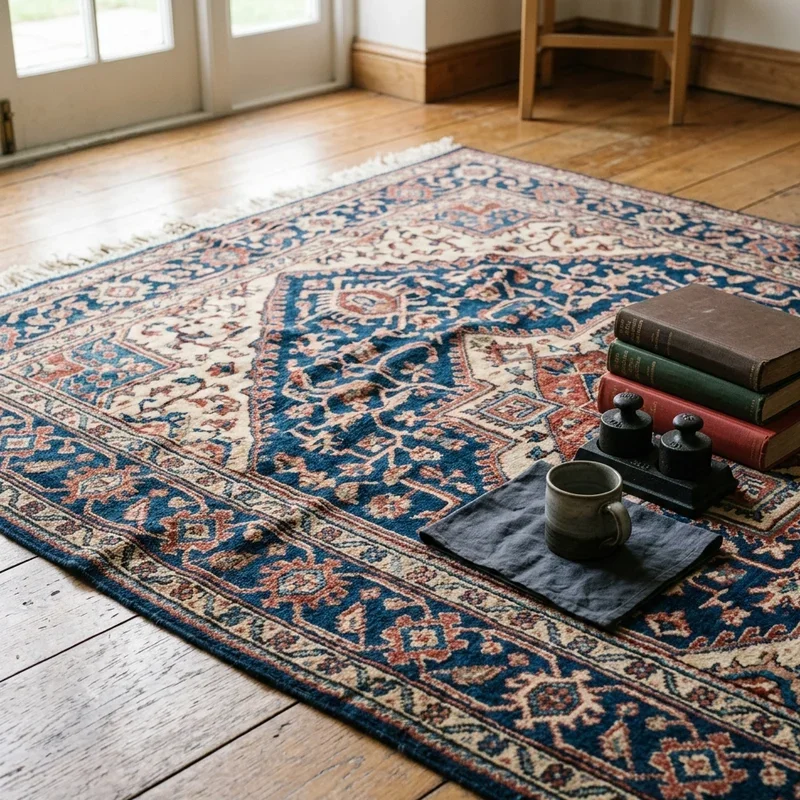
Sometimes the simplest solution is also the most effective. Placing heavy objects on the wrinkled areas of your rug and letting them sit for a day or two can press out creases through sheer weight and gravity.
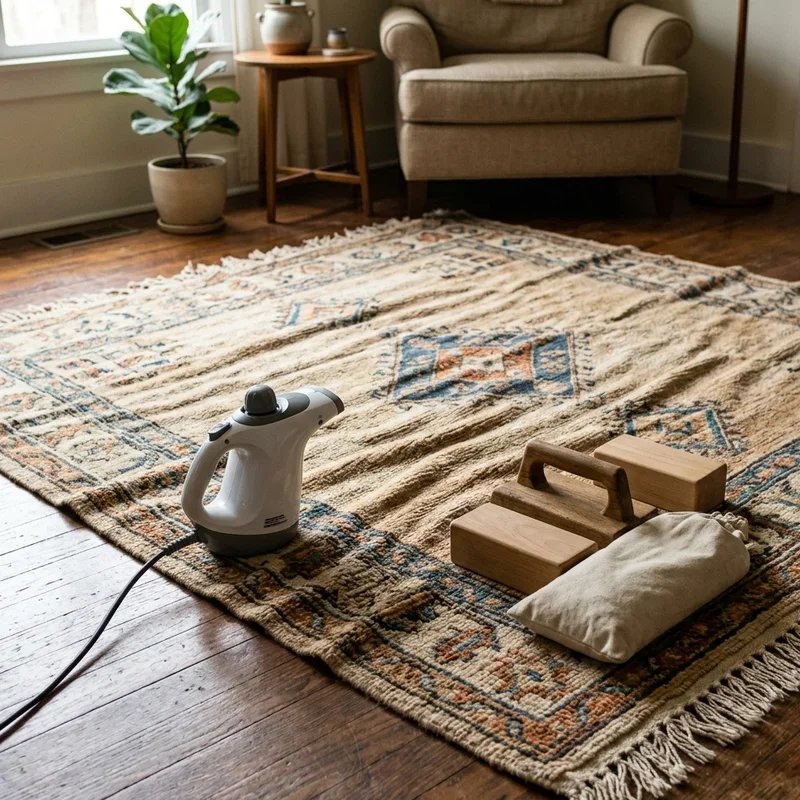
Stack heavy books, filled boxes, or even bags of rice or sand on the problem areas. Spread the weight as evenly as possible to avoid creating new dents while you are fixing the old wrinkles. Leave everything in place for at least 24 hours, then remove the weights and check your progress.
For edge curling, which is one of the most common rug complaints, place heavy objects along the curled edges and let them sit overnight. You can also tape the edges down temporarily with double-sided carpet tape while the rug adjusts to its new position.
If you are setting up furniture in the room anyway, strategically place the heaviest pieces on the most wrinkled areas. Your couch, bookshelf, or entertainment center will do double duty as both a room anchor and a rug flattener. Just make sure you are not creating new compression problems by concentrating too much weight in a small area.
Steaming the Wrinkles Out
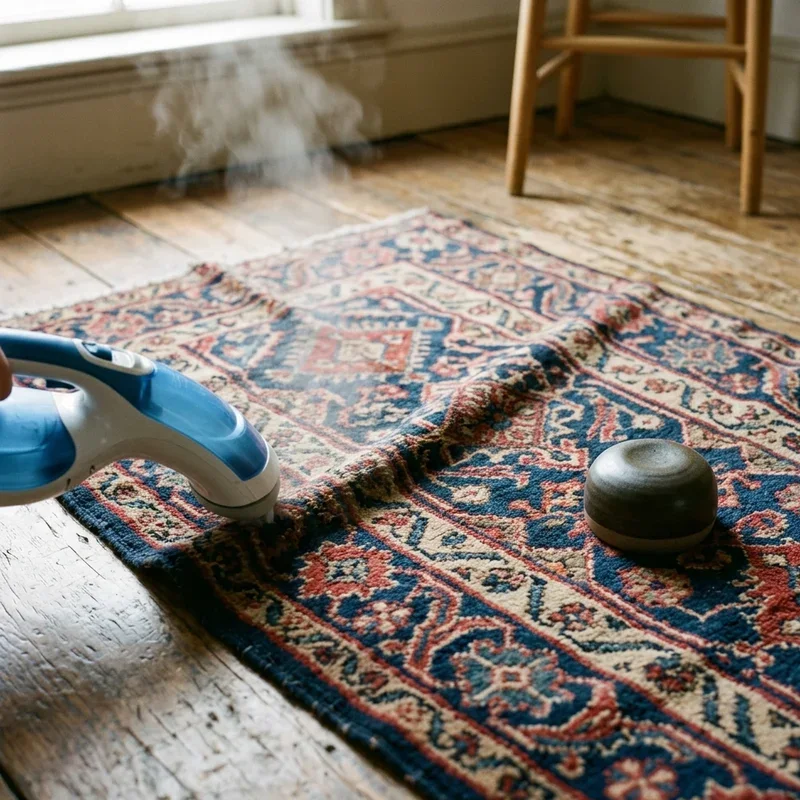
Steam is one of the most effective tools for removing rug wrinkles, and it works on almost every type of rug material. The moisture and heat from steam soften the fibers and backing, making them malleable enough to reshape and flatten.
If you have a handheld garment steamer, hold it a few inches above the wrinkled area and let the steam penetrate the fibers. Do not press the steamer directly against the rug surface, as concentrated heat can scorch or melt certain materials, especially synthetics. Keep the steamer moving and work in slow, even passes over the wrinkled areas.
After steaming, immediately smooth the area flat with your hands or a clean towel and place a heavy object on top while the rug cools and dries. The combination of heat followed by pressure is incredibly effective at resetting the rug's shape.
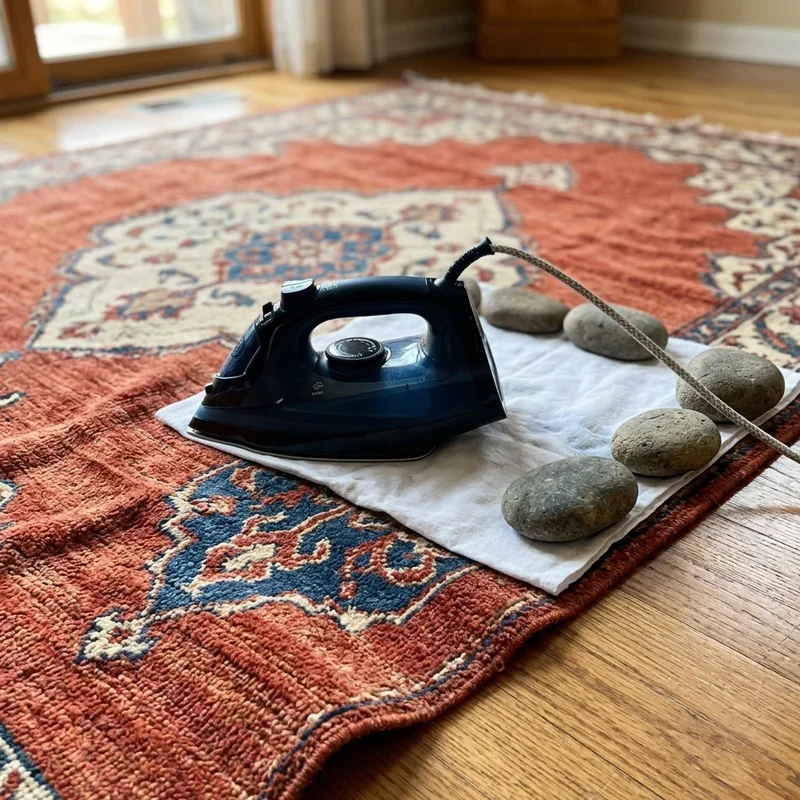
No steamer? No problem. You can achieve a similar effect with a damp towel and an iron. Lay a clean, damp towel over the wrinkled area and press with an iron set to medium heat. The towel acts as a protective barrier between the iron and the rug, preventing direct contact that could damage the fibers. Work slowly, lifting the towel periodically to check your progress.
A word of caution here. Always test your steaming or ironing method on a small, inconspicuous area of the rug first. Some materials, particularly silk, certain synthetics, and delicate hand-knotted rugs, can be damaged by heat and moisture. Better to discover a problem on a hidden corner than in the middle of your living room.
The Damp Towel and Flat Dry Method
For rugs that respond well to moisture but do not need the intensity of steam, the damp towel method is a gentler alternative. Lay a clean towel soaked in warm water and thoroughly wrung out over the wrinkled sections of the rug. The moisture slowly penetrates the fibers and relaxes the backing without the concentrated heat of a steamer or iron.
Leave the damp towel in place for several hours, checking periodically to make sure the rug underneath is getting slightly damp but not soaking wet. Once you remove the towel, smooth the area flat and weigh it down with heavy objects while it air dries completely.
This method is particularly good for natural fiber rugs like wool and cotton that respond well to controlled moisture. It is also a safe bet for antique or delicate rugs where you want to avoid heat entirely.
The critical thing is to make sure the rug dries completely before you walk on it or place furniture on it. A rug that stays damp for too long can develop mold, mildew, and unpleasant odors, which is a whole different set of problems you really do not want to deal with.
Using a Hair Dryer for Targeted Wrinkles
When you are dealing with just a few small wrinkles or creases rather than a rug-wide problem, a hair dryer can be the perfect precision tool. Set it to medium heat and hold it about six inches away from the wrinkled area. Move it back and forth slowly, warming the fibers and backing until they become pliable.
Once the area feels warm and flexible, use your hands to smooth the wrinkle flat and hold it in position for a minute or two while it cools. If the wrinkle is stubborn, repeat the process a couple of times. The heat softens the rug's memory, and holding it flat while it cools resets the shape.
This technique works particularly well on synthetic rugs, which tend to soften quickly when exposed to heat. Just do not crank the hair dryer up to its highest setting and hold it too close. Overheating a synthetic rug can cause the fibers to melt, warp, or discolor, and that is a mistake you can not undo.
Applying Double-Sided Carpet Tape
Carpet tape is more of a preventive measure than a wrinkle removal technique, but it can work wonders for keeping a rug flat once you have dealt with the initial wrinkles. Apply strips of double-sided carpet tape around the perimeter of the rug and across any areas that tend to buckle or curl.
The tape adheres to both the rug backing and the floor, creating a bond that holds everything firmly in place. It is especially useful for thin, lightweight rugs that shift around on hard floors and develop wrinkles from movement.
Make sure you use tape that is specifically designed for rugs and floors. Regular packing tape or duct tape can leave sticky residue on your flooring that is a nightmare to clean up. Quality carpet tape removes cleanly when you eventually want to reposition or replace the rug.
Choosing the Right Rug Pad to Prevent Future Wrinkles
We touched on rug pads earlier, and they really do deserve their own section because the right pad is hands down the best long-term wrinkle prevention tool you can invest in.
A good rug pad does three things. It grips the floor to prevent the rug from sliding, it grips the rug to keep it from bunching, and it provides a cushioned layer that absorbs the compression and foot traffic that lead to wrinkles over time.
For hard floors like hardwood, tile, or laminate, look for a pad with a natural rubber backing that grips the floor without leaving marks or residue. Felt and rubber combination pads are particularly popular because they offer excellent cushioning and grip in one product.
For carpeted floors, you need a different type of pad with a textured surface that anchors the rug to the carpet beneath it. These pads prevent the rug from skating around on top of the carpet, which is a common cause of wrinkles and bunching in layered floor setups.
Size matters when it comes to rug pads. The pad should be slightly smaller than the rug on all sides, typically about one inch smaller all around. This ensures the pad stays hidden beneath the rug and does not create a visible lip or bump along the edges.
Do not cheap out on your rug pad. A quality pad costs a fraction of what you paid for the rug itself, and it dramatically extends the rug's lifespan while keeping it flat and wrinkle-free. Think of it as insurance for your investment.
Material-Specific Tips for Wrinkle Removal
Different rug materials respond to different treatments, so knowing what your rug is made of helps you choose the safest and most effective flattening method.
Wool rugs are resilient and respond beautifully to steam and controlled moisture. They have a natural elasticity that helps them bounce back from wrinkles once the fibers are relaxed. Avoid excessive heat, which can felt or shrink wool fibers permanently.
Polypropylene and other synthetic rugs soften quickly with heat, making hair dryers and warm ironing through a towel particularly effective. However, synthetics are also the most susceptible to heat damage, so always use moderate temperatures and keep heat sources moving.
Cotton rugs are generally easy to flatten and can handle moisture well. They are often thin enough that simple reverse rolling or weighing down with heavy objects does the trick without any heat or steam.
Jute and sisal rugs are trickier because they are extremely sensitive to moisture. Too much water can cause these natural plant fibers to swell, warp, and even rot. Stick with dry methods like reverse rolling, weight pressing, and minimal heat from a hair dryer for these materials.
Silk rugs require the most delicate handling. Avoid heat, moisture, and aggressive physical manipulation. If a silk rug has wrinkles that will not come out with gentle reverse rolling or flat pressing, consult a professional rug cleaner rather than risking damage to such a valuable piece.
How to Get Wrinkles Out of a Rug Easily at Home: Prevention Strategies
Once you have got your rug lying perfectly flat, the last thing you want is for those wrinkles to come back. Prevention is always easier than correction, so let us talk about how to keep things smooth going forward.
Rotate your rug every few months to distribute wear evenly across the entire surface. This prevents traffic patterns from developing in one area while other sections remain untouched, which is a common cause of uneven stretching and buckling.
Control the humidity in your home, especially during summer months when moisture levels tend to spike. A dehumidifier in rooms with area rugs can prevent the moisture absorption that leads to swelling and rippling in natural fiber rugs.
Rearrange your furniture occasionally to relieve the compression points where heavy pieces sit on the rug. When you move furniture, smooth out any dents or impressions immediately before they have a chance to set permanently.
Clean your rugs regularly but carefully. Aggressive vacuuming with a beater bar can stretch and distort rug fibers over time. Use the suction-only setting for delicate rugs and always vacuum in the direction of the pile rather than against it.
Address spills and wet spots immediately. Blot up moisture quickly, elevate the wet area if possible to allow air circulation underneath, and use fans to speed up the drying process. The faster a rug dries after getting wet, the less likely it is to develop wrinkles from uneven drying.
When a Professional Touch Is Needed
Most rug wrinkles can be handled at home with the methods we have discussed, but there are times when calling in a pro is the smarter move.
Antique, handmade, or extremely valuable rugs should be treated with extra caution. If you are not confident about applying heat, moisture, or pressure to a rug that costs more than your car, a professional rug restoration specialist has the tools and expertise to flatten it safely.
Rugs with persistent wrinkles that do not respond to any home methods might have structural damage to the backing or foundation. A professional can assess the damage and determine whether the rug can be repaired or re-stretched.
Wall-to-wall carpeting that has developed wrinkles or buckles typically needs professional re-stretching with a power stretcher, which is a specialized tool that most homeowners do not have access to. This is different from area rug wrinkling and really does require a trained installer.
Conclusion
A wrinkled rug does not have to stay that way, and you certainly do not need to replace it or spend big money on professional help. With simple techniques like reverse rolling, steaming, sun flattening, and strategic weight placement, you can smooth out even the most stubborn creases right in your own home. Pair these fixes with a quality rug pad and some basic prevention habits, and your rug will stay perfectly flat and beautiful for years to come. It really is that straightforward once you know the tricks.
Read next: What Color Rug Goes With a Beige Couch? Guide
Frequently Asked Questions
1.How long does it take for a new rug to flatten on its own?
Most new rugs flatten naturally within one to two weeks, though some stubborn ones take longer.
2.Can I put my wrinkled rug in the dryer to fix it?
No, machine dryers can shrink, melt, or permanently damage most rug materials and should be avoided entirely.
3.Will steam cleaning cause my rug to wrinkle afterward?
Steam cleaning can cause temporary wrinkles, but proper drying with good airflow prevents them from becoming permanent.
4.Is it safe to iron directly on a rug to remove creases?
Never iron directly on a rug surface. Always place a damp towel between the iron and rug fibers.
5.Do rug pads really help prevent wrinkles from forming over time?
Yes, quality rug pads provide grip and cushioning that significantly reduce shifting, bunching, and wrinkle formation.
Stay up to date with our latest ideas!